
Peterbilt Heavy Duty Body Builder Manual 2021 – 579 567 389 367 365 Truck Upfit Guide PDF
Original price was: $34.95.$19.95Current price is: $19.95.
Complete 2021 Peterbilt Heavy Duty Body Builder Manual covering 579, 567, 389, 367 and 365 models with dimensions, body mounting, frame modifications, CAN communications, electrical systems, PTO, aftertreatment and routing guidelines for upfitters and body installers.
Description
Peterbilt 2021 Heavy Duty Body Builder Manual
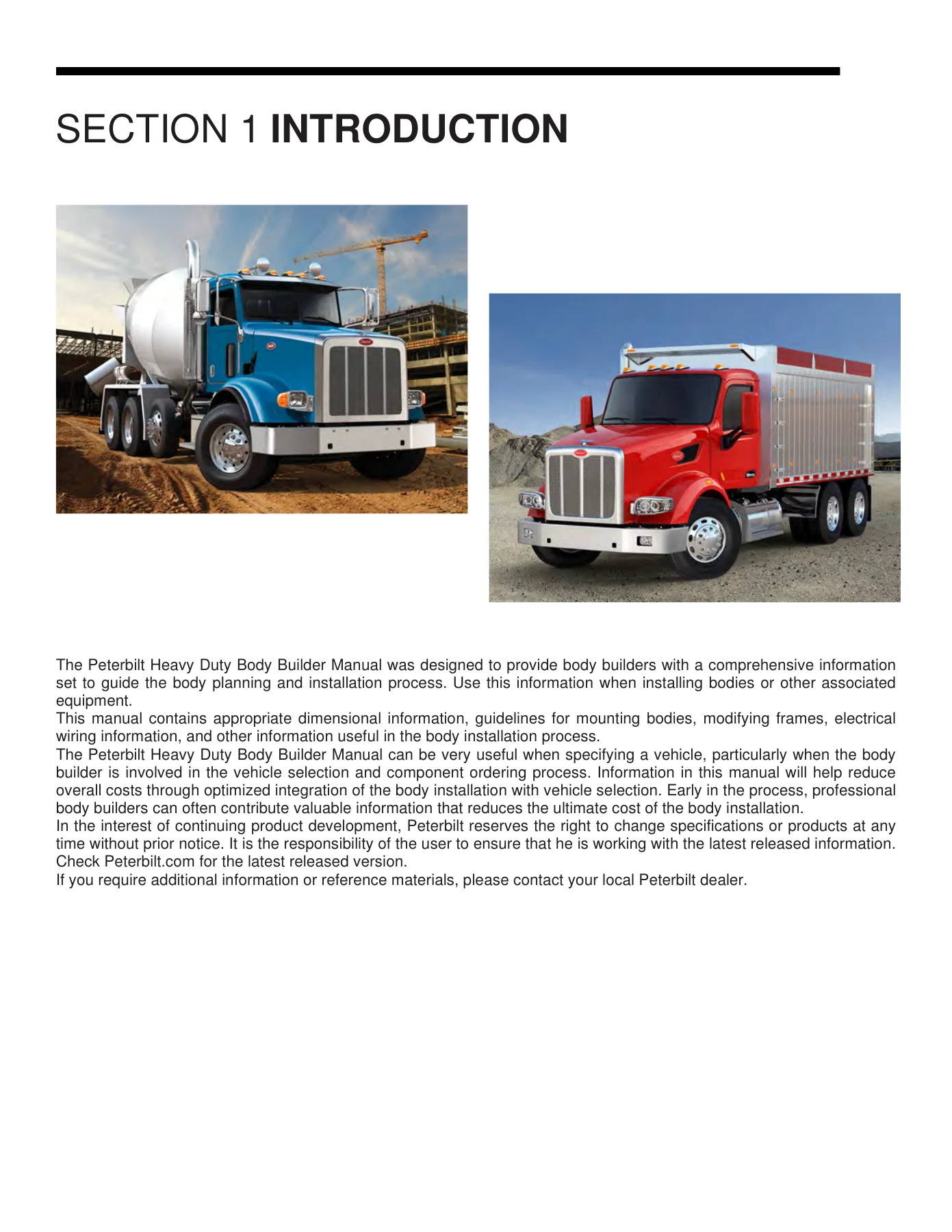
The Peterbilt Heavy Duty Body Builder Manual 2021 is the comprehensive reference published by Peterbilt Motors Company to guide body planning and installation across the 2021 model year heavy duty lineup. Whether you are specifying a new chassis, mounting a body, modifying a frame, or tying into the multiplexed electrical architecture, this manual delivers the dimensional data, safety limits and integration procedures you need to complete an installation correctly the first time. It covers the 579, 567, 389, 367 and 365 families in single and tandem configurations, including sleeper and extended day cab variants.
File Details
- Manual type: Heavy Duty Body Builder Manual (upfitter / intermediate & final stage manufacturer guide)
- Brand: Peterbilt Motors Company
- Model year: 2021
- Covered models: 579, 567, 389, 367, 365 (including SBFA, SFFA, FEPTO, Heavy Haul and Extended Day Cab variants)
- Language: English
- Page count: 289 pages
- File format: PDF
- Document date: 2021 (revision log runs from 3/15/2021 initial release through 9/15/2022 updates)
Chapters Covered
The 2021 Peterbilt Heavy Duty Body Builder Manual is organised into ten primary sections, each targeting a specific phase of the body installation process:
- Section 1: Introduction – purpose and scope of the manual
- Section 2: Safety and Compliance
- Safety signals and alerting messages
- Federal Motor Vehicle Safety Standards and compliance
- Noise and emissions requirements
- Fuel system, compressed air system, exhaust and aftertreatment
- Cooling system, electrical system, air intake, charge air cooler
- Bendix Wingman Fusion 2.0 and 2.9 radar clearance
- General wire routing
- Safety related components and systems
- Section 3: Dimensions
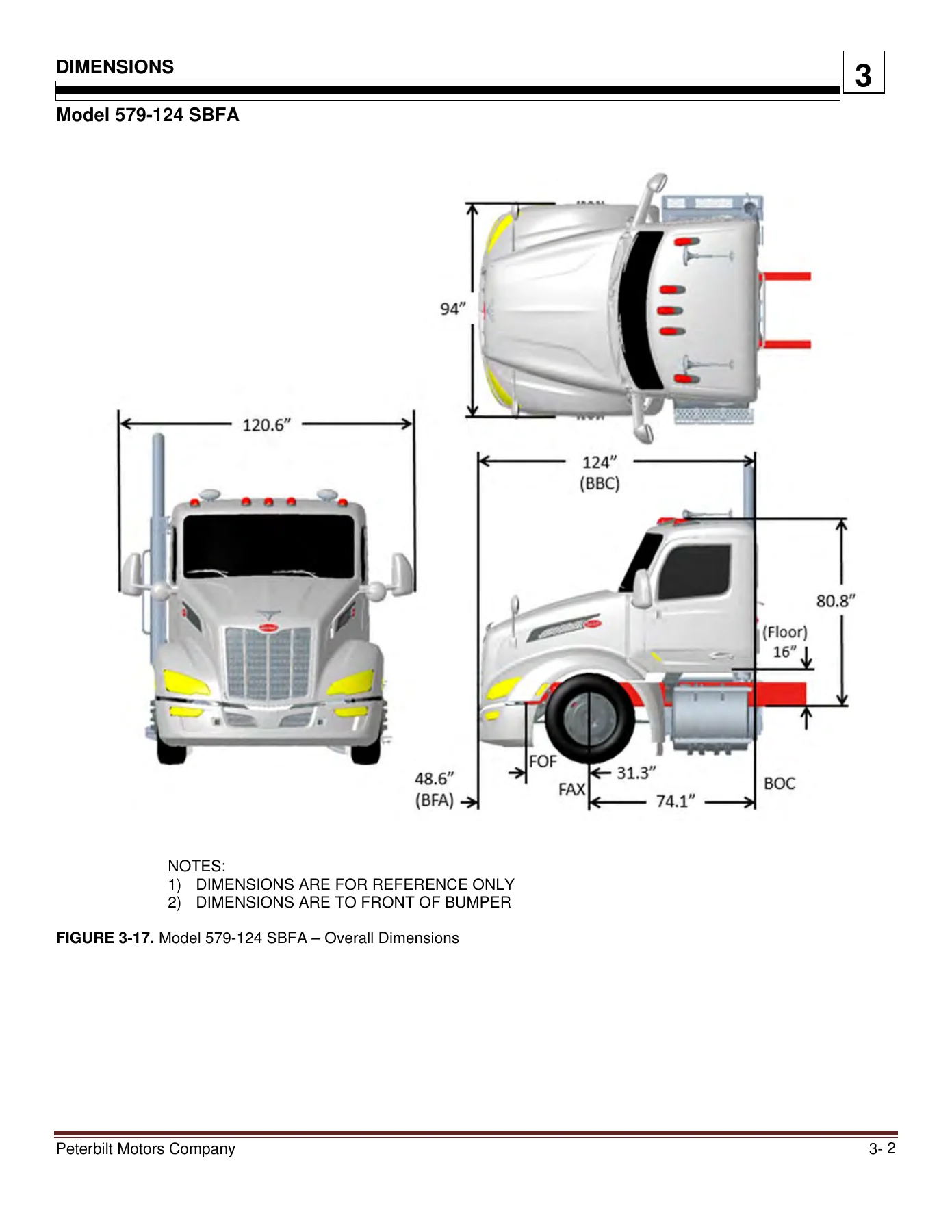
- Overall dimensions for 579-124 SBFA, 579-118 SBFA, 567-115 SFFA, 567-121 SFFA, 567-115 SBFA, 567-121 SBFA, 389-131, 389-123, 367-123 SBFA, 367-123 SBFA HH, 367-123 SBFA FEPTO, 365-115 SFFA, 365-115 SBFA, 365-115 SBFA 31″ FEPTO, 365-115 SBFA 22″ FEPTO
- Sleeper dimensions, cab dimensions (1.9M cab family), extended cab
- Frame rails, frame height charts, rear frame heights
- Rear suspension layouts (Air Trac, Reyco, Neway, Hendrickson, Chalmers)
- Lift axles (pushers and tags)
- Axle track and tire width
- Front drive axle, PTOs and auxiliary transmissions
- Guppy outserts
- Exhaust height, ground clearance and overall cab height calculations
- Frame components and frame space requirements
- 389 and 567/579 family 2021 emissions exhaust diagrams
- Section 4: Body Mounting
- Frame rails, critical clearances
- Body mounting using brackets
- Body mounting using U-bolts
- Rear body mount and fishplate bracket
- Section 5: Frame Modifications
- Drilling rails, modifying frame length
- Changing wheelbase
- Crossmembers, torque requirements
- Welding and welding precautions
- Section 6: Controller Area Network (CAN) Communications
- SAE J1939, Parameter Group Number, Suspect Parameter Number
- CAN messages available on body connections
- Section 7a: Electrical 579 Family
- Electrical acronym library, wiring circuit codes
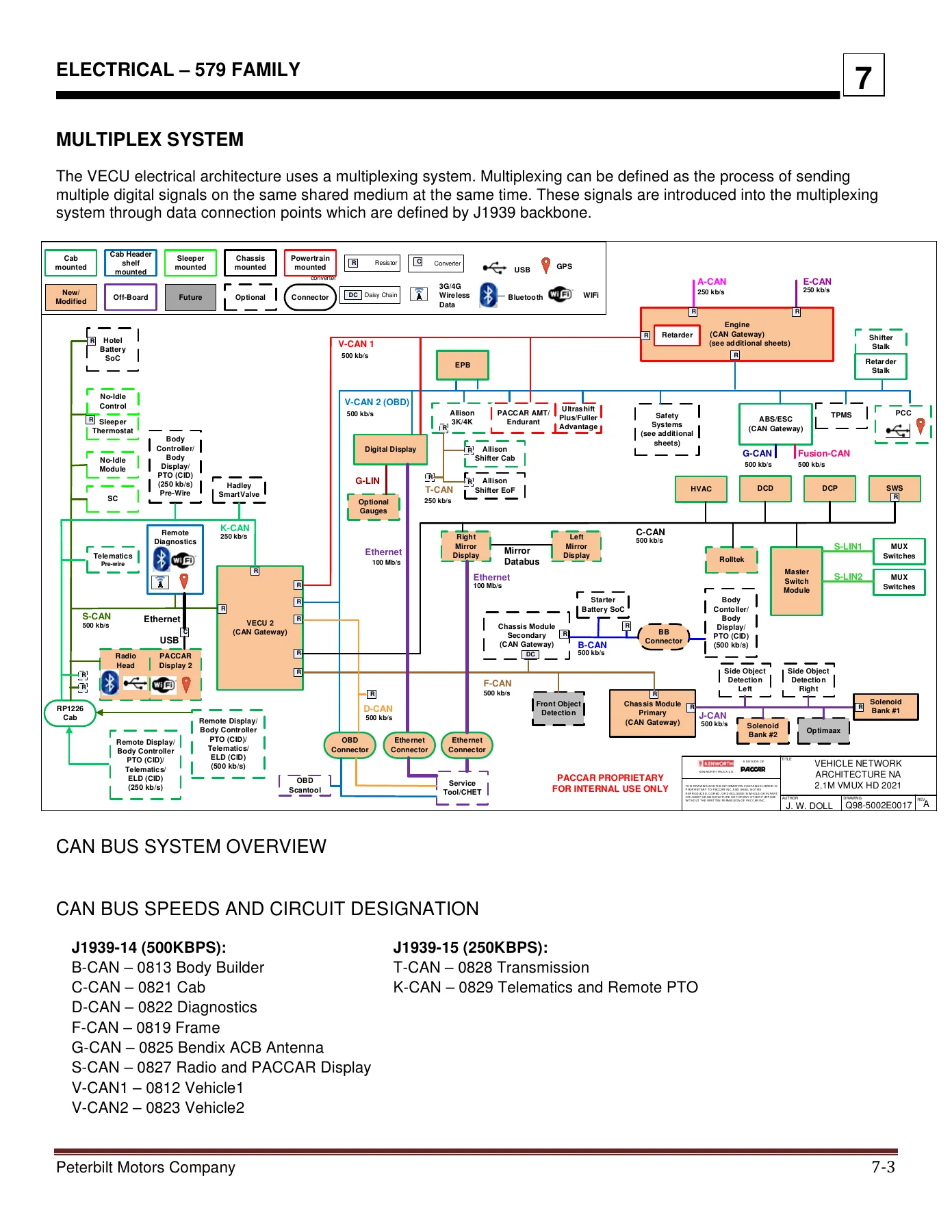
- Multiplex system, component and harness overview
- In-cab CAN based messaging connector (RP1226)
- Body connection points, electric engaged equipment
- Optional 8 pin PTO input connector
- Remote throttle and remote PTO controls
- Dual station controls, power distribution center
- Chassis module, fuse groups
- Electric over air solenoids, switches, switch relearn process
- Grounding, spare power, junction box
- Transmission back up signals, snow plow lighting, lift axles
- Digital display, gauges, telltale icons and connector locations
- Section 7b: Electrical 389 Family
- Electrical acronym library, wiring circuit codes
- Multiplex system, component and harness overview
- In-cab CAN based messaging connector (RP1226)
- Body connection points, electric engaged equipment
- Optional 8 pin PTO input connector
- Remote throttle and remote PTO controls, dual station controls
- Main power distribution center, chassis module
- Electric over air solenoids, switches, switch relearn process
- Grounding, spare power
- Transmission backup signals, telltale icons and connector locations
- Lift axles, gauges, common terminals and pins for body builder connections
- Section 8: Power Take Off (PTO)
- PTO acronym library, transmission mounted PTO
- Front engine PTO (FEPTO), rear engine PTO (REPTO)
- PTO mounting clearance charts
- MX PTO Mode Control (PMC), MX PTO mode features, protections and limits
- MX PTO Speed Control (PSC) features and interlocks
- Remote PMC connections, PTO mode control flow charts
- MX PTO troubleshooting guide
- Section 9: Aftertreatment System
- DEF system schematic, general guidelines for the DEF system
- Installation requirements and dimensions for the DEF system
- Routing to the dosing module (injector)
- DEF supply module mounting requirements
- Section 10: Routing
- Definitions, routing requirements, wires in bundles
- Wires crossing other components, piping, hoses crossing components
- Air compressor discharge hoses, bundle spacing
- Routing of wires and hoses near moving components
- Routing of wires and hoses near exhaust system
In practical terms, this 2021 Peterbilt Heavy Duty Body Builder Manual gives an upfitter, dealership technician or fleet shop the complete framework for integrating aftermarket equipment with a 2021 Peterbilt chassis. The dimensional section lets you plan body lengths, frame space, exhaust heights and ground clearances before the truck arrives. The safety and compliance section tells you what may not be altered — from DPF and SCR hardware to the OBD power supply and Wingman Fusion radar clearance zones. The electrical sections document how the VMUX/VECU architecture behaves, where every body connector is, how the RP1226 messaging connector and spare circuits are wired, and how to program dash switch relearns with DAVIE. The PTO section covers transmission-mounted, front engine and rear engine PTOs and explains how PACCAR MX PTO Mode Control and PTO Speed Control are configured, including troubleshooting flow. The aftertreatment section keeps DEF tank relocation inside the limits that prevent engine derate, and the routing section defines clamp spacing, clearances and protection requirements for hoses and harnesses.
Models and Configurations Documented
The manual provides detailed dimensional drawings and layout data for the following 2021 Peterbilt chassis and configurations:
- 579 – 124″ SBFA, 118″ SBFA
- 567 – 115″ SFFA, 121″ SFFA, 115″ SBFA, 121″ SBFA
- 389 – 131, 123, 123 with low profile aluminium hood
- 367 – 123″ SBFA, 123″ SBFA with 10″ Extended Day Cab, 123″ SBFA Heavy Haul Hood, 123″ SBFA HH 10″ Extended Day Cab, 123″ SBFA FEPTO Heavy Haul Hood
- 365 – 115″ SFFA, 115″ SBFA, 115″ SBFA 31″ FEPTO, 115″ SBFA 22″ FEPTO
Sleeper configurations, cab dimensions for the 1.9M cab family, extended cab dimensions and a range of rear suspension layouts are also included so that body length, frame space and ride height can be matched to the chassis as ordered.
What This Manual Helps You Do
With the Peterbilt Heavy Duty Body Builder Manual 2021 in hand, a body builder or installer can:
- Plan body and frame space before the chassis arrives by working from factory-supplied dimensions, frame height charts, frame space requirement tables and rear suspension layouts.
- Mount a body correctly using brackets, U-bolts or fishplate brackets while respecting the minimum 8 inch tyre-to-body clearance and the 4 inch back-of-cab clearance.
- Drill, cut or modify frame rails and frame length within the limits that preserve frame strength, and understand why rail flange drilling and welding are prohibited.
- Integrate electrical equipment with the VECU / VMUX architecture using the RP1226 connector, in-cab CAN messaging, body connection points, spare power circuits, chassis module fuse groups and switch relearn procedures.
- Wire remote throttle and PTO controls for PACCAR MX and Cummins engines using the 12-pin connector pinouts and dual station control wiring.
- Spec and mount transmission-mounted, front engine and rear engine PTOs while staying clear of frame rails, shackles, exhaust and clutch actuators.
- Relocate or service DEF system components within the installation requirements that keep the aftertreatment system compliant and avoid engine shutdown.
- Route hoses and electrical harnesses to the clamp spacing, standoff and heat clearance rules that prevent chafing, melting and electrical faults.
- Keep the completed vehicle within the Federal Motor Vehicle Safety Standards and emissions regulations that apply to the 2021 model year.
Getting these details right matters. An incorrectly specified circuit breaker, a body mounted without a spacer, a frame rail drilled in the wrong place, a DEF tank relocated beyond the pressure hose limit, or a PTO mounted where it contacts the rear shackle can all lead to premature failure, electrical fire, engine derate or an accident. The manual exists precisely to prevent those outcomes by giving you the manufacturer’s approved clearances, torque values, wiring pinouts and installation limits in one place.
Why This 2021 Peterbilt Body Builder Manual Is Worth Having
Factory body builder manuals are not general repair guides. They are the documents Peterbilt publishes specifically so that intermediate and final stage manufacturers can complete an incomplete vehicle without compromising the compliance, safety systems or durability that were built into the chassis. For the 2021 model year, that includes the VMUX electrical architecture with its parallel control unit, the 500 kbps F-CAN chassis module signalling, the Bendix Wingman Fusion radar clearance zones, and the DEF system installation requirements that govern any relocation.
Because the 2021 Peterbilt Heavy Duty Body Builder Manual covers the 579, 567, 389, 367 and 365 families in one volume, it is equally useful for a shop that upfits multiple Peterbilt platforms and for a single-vehicle owner who needs to know exactly how the truck’s frame, wiring and aftertreatment systems are meant to be treated. The dimensional drawings alone — overall dimensions, frame heights, suspension layouts, lift axle layouts, guppy outserts, exhaust and cab height calculations — save hours of measurement and guesswork before a body is even ordered.
IMAGES PREVIEW
Instant PDF Delivery
The Peterbilt Heavy Duty Body Builder Manual 2021 is delivered as an instant PDF download. There is no shipping, no waiting for a printed binder, and no risk of a damaged or missing copy. Once payment is complete you can open the file on a laptop, tablet or phone in the shop, search through the sections you need, and print the dimensional drawings, wiring pinouts, torque tables and clearance diagrams for the job at hand. Whether you are planning a body installation on a 579, wiring a PTO on a 389, or confirming DEF routing on a 567, having the manual available on any device keeps the correct procedure within reach.


Reviews
There are no reviews yet.