
Sandvik TH663i Toro Underground Dump Truck Operator’s Manual 2024 – PDF
Original price was: $34.95.$21.95Current price is: $21.95.
Complete 286-page 2024 Sandvik TH663i (Toro TH663i) Tier 2 underground dump truck Operator’s Manual. Covers starting, hauling, downhill retarder technique, dumping, ejector box operation, VCM display, daily maintenance, troubleshooting and full technical specifications. Instant PDF download.
Description
Sandvik TH663i Underground Dump Truck Operator’s Manual – 2024 Edition
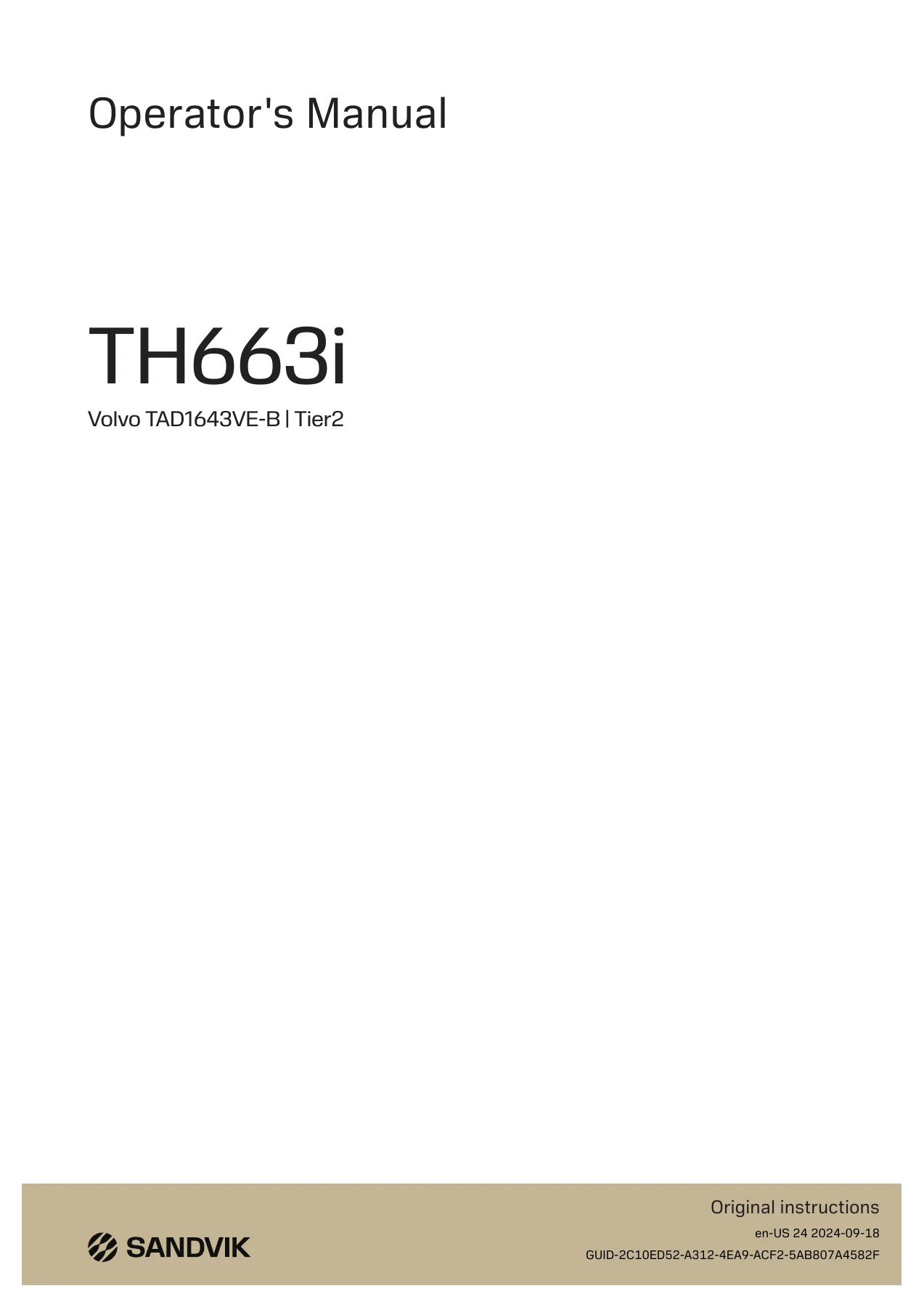
The Sandvik TH663i Toro is a 63,000 kg payload underground dump truck built for hard rock mining, and the 2024 Operator’s Manual is the document that ships with the machine for the person who actually runs it. This 286-page PDF covers the full operating envelope of the TH663i Tier 2 – prestart checks, cold and arctic starting, tramming technique on grade, downhill retarder use, dumping cycles, ejector box operation, VCM display navigation, operator-level maintenance tasks, troubleshooting and the complete technical specification tables. It is issued under document ID GUID-2C10ED52-A312-4EA9-ACF2-5AB807A4582F and dated 2024-09-18, and it is exactly the operator documentation Sandvik publishes for the machine.
File Details
- Manual type: Operator’s Manual
- Brand / manufacturer: Sandvik Mining and Construction Oy, Turku, Finland
- Model: Toro TH663i – Tier 2
- Document ID: GUID-2C10ED52-A312-4EA9-ACF2-5AB807A4582F en-US 24
- Date / revision: 2024-09-18
- Language: English
- Page count: 286 pages
- File format: PDF
Chapters Covered in the Sandvik TH663i Operator’s Manual
- 1. Introduction – purpose of the instructions, product identification, manual family and location of manuals on the product, validity, target group, definitions and abbreviations (ROPS, FOPS, SAHR, DPF, SCR, VCM, VEB, Vodia and more)
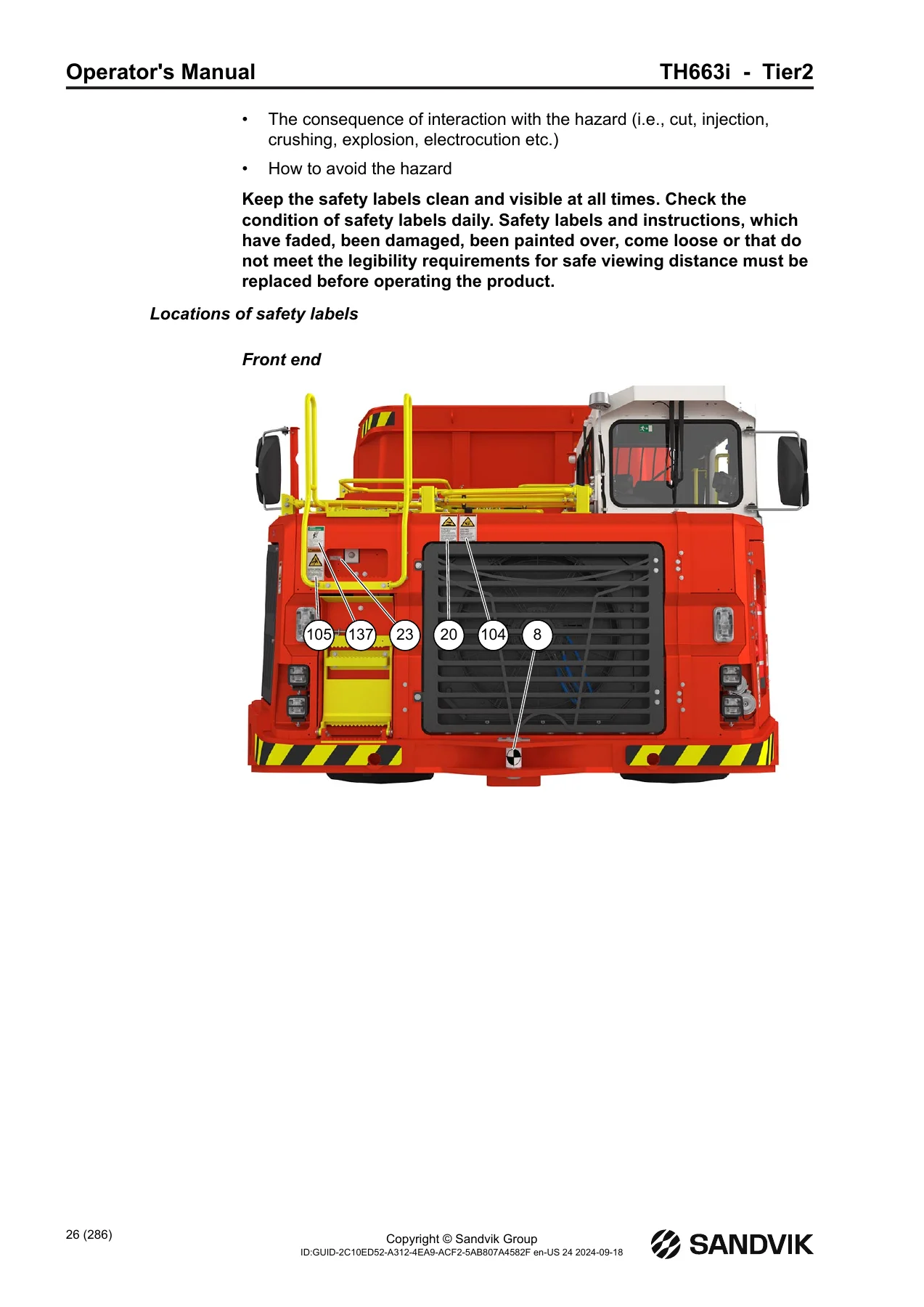
- 2. Safety and Environmental Instructions – signal words, hazard symbols, safety labels and their exact locations on the machine, user obligations, personal protective equipment, product limitations, intended use, prohibited use, centre of gravity, maximum inclination angles, operator visibility, hazard zone, safeguarding, guards and protective devices (frame articulation locking device, box support device, wheel chocks, tailgate service pins, safety rails), emergency stop use, evacuation route, three-point support, isolation and energy dissipation (hydraulic, fuel, electrical, suspension), fire risk control measures (Eclipse and ANSUL Twin fire suppression systems), emission hazards (noise, vibration, dust, hazardous gases, diesel emissions and DPM), emergency procedures, safety considerations for maintenance, environment, decommissioning, dismantling and disposal
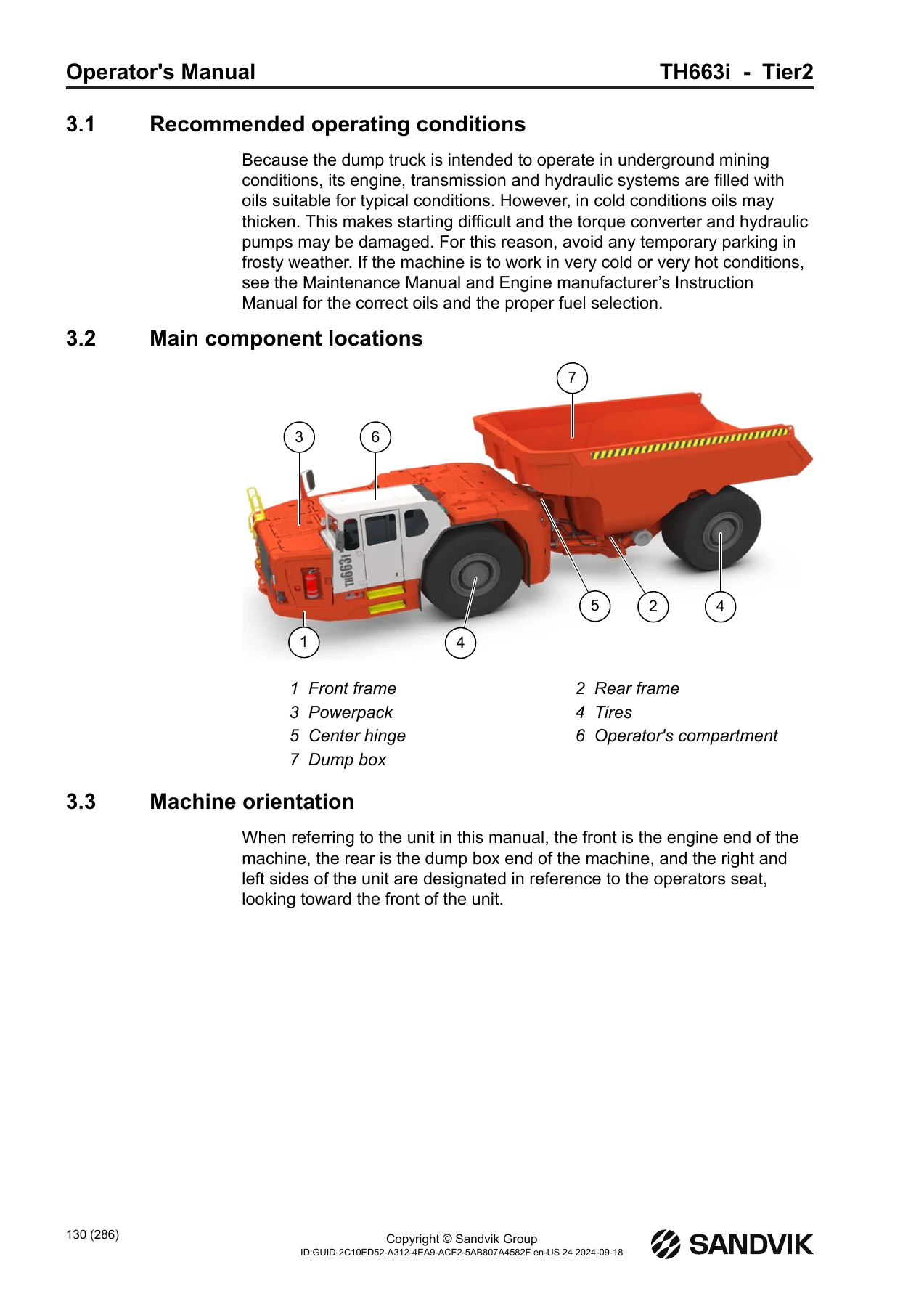
- 3. Machine Description – recommended operating conditions, main component locations, machine orientation, instrument panel switches and functions, monitors and ceiling fixtures, camera monitor and reverse grid lines, inclination gauges, box payload indicator lights, external scale displays, control levers and pedals, gear range selector, Vehicle Control and Management System (VCM) architecture and display, operator’s seat (MSG97) adjustments, trainer’s seat, circuit breakers and fuse boxes
- 4. Operating Instructions – opening the fuel lines shut-off valve, turning the main switch on, drive selection mode, automation mode light, closing the suspension discharge valve, getting into the operator’s compartment, prestart checks, starting the engine, checking controls, using driving controls (setting the unit in motion, braking, parking, stopping the engine), operating the machine (hauling uphill and downhill, engine brake use, retarder use, operator speed assist, dumping procedure, loading and dumping the ejector box, suspension adjustment, integrated scale control and weighing, operating with optional Diesel Particulate Filters)
- 5. Operator’s Maintenance Instructions – responsibilities and typical work cycle, walk-around inspection, seat belt condition check, alarm lights check, VCM-system alerts, oil/fuel/coolant leak and mounting checks, tires and wheel nuts, cameras, operation lights, guards and plates, ANSUL fire suppression check, hydraulic oil level, dump box, jacking cylinders, transmission oil level, brake hydraulic oil level, grease tank filling, engine coolant level, fuel tank filling (including Wiggins quick fill), upbox oil level, fuel system check, engine additional equipment, handheld fire extinguisher, engine oil level, window washer fluid, emergency stop and shutdown system, brake test, neutral brake function, door interlock switch
- 6. Additional Instructions – brake releasing pump, emergency steering system, towing (both a disabled TH663i and towing with a TH663i), lifting methods and lifting points, jack system lifting and lowering, operation in cold weather, arctic package, storing instructions, transporting the dump truck
- 7. Troubleshooting – instrument panel faults, engine will not crank, engine cranks but will not start, engine stalls, excessive exhaust smoke, misfiring, knocking, low oil pressure, overheating, hydraulic oil foaming, machine will not move, machine will not turn, little or no dump box action, defective lighting system
- 8. Technical Specifications – machine dimensions, turning radius and angle, dump box motion time and dumping angle, forward speeds by gear, operating and loaded weights, maximum payload, brake system data, engine data, electrical system, fuel and oil capacities, metric/imperial conversion table
What This Operator’s Manual Actually Gives You
An operator manual is only as useful as the depth it goes to, and this Sandvik TH663i document goes deep. The safety chapter alone devotes dozens of pages to hazard symbols and machine-mounted warning label locations, and then walks the operator through every complementary protective measure the truck carries – the frame articulation locking device, the box support device, the tailgate service pins, the wheel chocks, the safety rails, the emergency stop buttons, the evacuation window and the ANSUL / Eclipse fire suppression system activation. It explains the hazard zone concept, three-point climbing technique, safe isolation and depressurisation procedures, and how to work under the machine safely when the job requires it.
The machine description chapter is where the controls are explained properly: what every switch, dial and button on the instrument panel does, how the VCM display is structured, how to navigate between the drive view, temperature tab, pressure tab, brake pressure tab and tire pressure tab, what every icon on the screen means, how the inclination gauges read, how the box payload indicator lights work, and how the external scale displays help the loader operator avoid under and overloading.
The operating instructions turn that theory into procedure – the exact sequence for opening the fuel shut-off valve, turning the main switch, checking drive selection mode, closing the suspension discharge valve, entering the compartment, running the prestart checks, starting the engine, verifying the controls, and putting the truck in motion. There is a full section on downhill driving technique with the engine brake and retarder, a section on operator speed assist, and step-by-step procedure for raising and lowering the box, loading and emptying the ejector box, and using the integrated scale.
The maintenance chapter is written specifically for the operator – the checks a TH663i driver is expected to complete at the start and end of every shift. That includes walk-around inspection, seat belt condition, alarm lights, VCM alerts, leak checks, tire and wheel nut inspection, camera cleaning, operation lights, guards and plates, hydraulic oil level, dump box, jacking cylinders, transmission oil level, brake hydraulic oil level, grease tank, engine coolant, fuel tank, upbox oil, fuel system, engine oil, washer fluid, and the emergency stop, brake test, neutral brake and door interlock functional checks.
The additional instructions cover everything the operator needs outside routine running: releasing the brakes with the electric brake release pump, using the emergency steering system, safe towing procedure with drive shaft disconnection, lifting points and lifting methods, the full jack system lifting and lowering routine with stands, cold weather operation, the arctic package, long-term storing instructions and transport tie-down.
The troubleshooting chapter is a quick-reference set of fault tables – engine will not crank, engine cranks but will not start, engine stalls, excessive exhaust smoke, misfiring, knocking, low oil pressure, overheating, hydraulic oil foaming, machine will not move, machine will not turn, little or no dump box action, and lighting faults – each with the likely cause and the correct remedy. The technical specifications chapter closes the manual with the machine dimensions, gear speeds, dump box timings, weights, brake system values, engine data, capacities and a metric/imperial conversion table.
Who This Sandvik TH663i Manual Is For
This is the operator-level document for the Sandvik Toro TH663i underground dump truck. It is written for the person who is going to run the truck on shift – whether that is a mine operator running a fleet of TH663i haulers, a trainer putting new operators through a competency programme, a maintenance planner writing shift-level inspection procedures, or a site safety officer who needs to verify the exact hazard zone, inclination angle limits and emergency stop locations for the truck. It also serves as the reference for anyone who needs to know how the VCM is structured, how the scale and box payload indicators work, how the retarder and operator speed assist are set, or how the fire suppression system is activated on this specific machine.
Because the manual is written to the operator role, it does not include the full preventive maintenance schedule, fluid and lubricant change intervals, engine or transmission rebuild procedures, or parts diagrams – those live in the separate Maintenance Manual, Service and Repair Manual and Parts Manual that Sandvik publishes alongside this one. What this operator manual does give you is the complete day-to-day operating envelope: how to start, drive, brake, dump, monitor, maintain and troubleshoot the TH663i safely, and how to recognise when the machine needs to go to a service bay rather than continue in use.
Get the Sandvik TH663i Operator’s Manual Instantly
Working from the correct procedures matters on a 63,000 kg underground hauler more than almost anywhere else. The right inclination limits, the right retarder selection on a loaded decline, the right prestart check before the truck goes underground – these are not optional details, and the Sandvik TH663i Operator’s Manual is where every one of them is written down. Whether you are briefing a new operator, auditing a shift routine, verifying the exact sequence for isolating the suspension or the brakes before maintenance, or simply replacing the copy that should be in the document box inside the cab, this manual gives you the authoritative factory wording.
This Sandvik TH663i Toro Underground Dump Truck Operator’s Manual 2024 edition is delivered as a PDF download immediately after checkout. There is no shipping, no waiting and no printed volume to be lost or damaged. Open it on a laptop in the workshop, a tablet in the service bay or a phone on the bench. Print the pages you actually need – the prestart checklist, the brake test procedure, the VCM icon map, the inclination angle limits – and keep them where the operator can reach them. It is a working document, not a shelf ornament.
IMAGES PREVIEW
Reviews
There are no reviews yet.