
Varian Clinac 6EX C-Series Technical Reference Service Calibration Interlocks Guide Spanish PDF Download
Original price was: $49.95.$29.95Current price is: $29.95.
314-page Spanish Varian Clinac Technical Reference Guide covering Clinac 6EX, 600C/600CD, DBX, iX, Cx, 21 EX, 23 EX, 2100/2300 series, DHX/DMX, Trilogy, Novalis Tx and UNIQUE. Covers Physics Mode, Service Mode, beam tests, calibration, low-energy PRF, diagnostics, system logs and extensive interlock troubleshooting for software through version 9.0. Instant PDF download.
Description
Varian Clinac Technical Reference Guide – 314-Page Spanish Technical, Service, Calibration & Interlock Reference
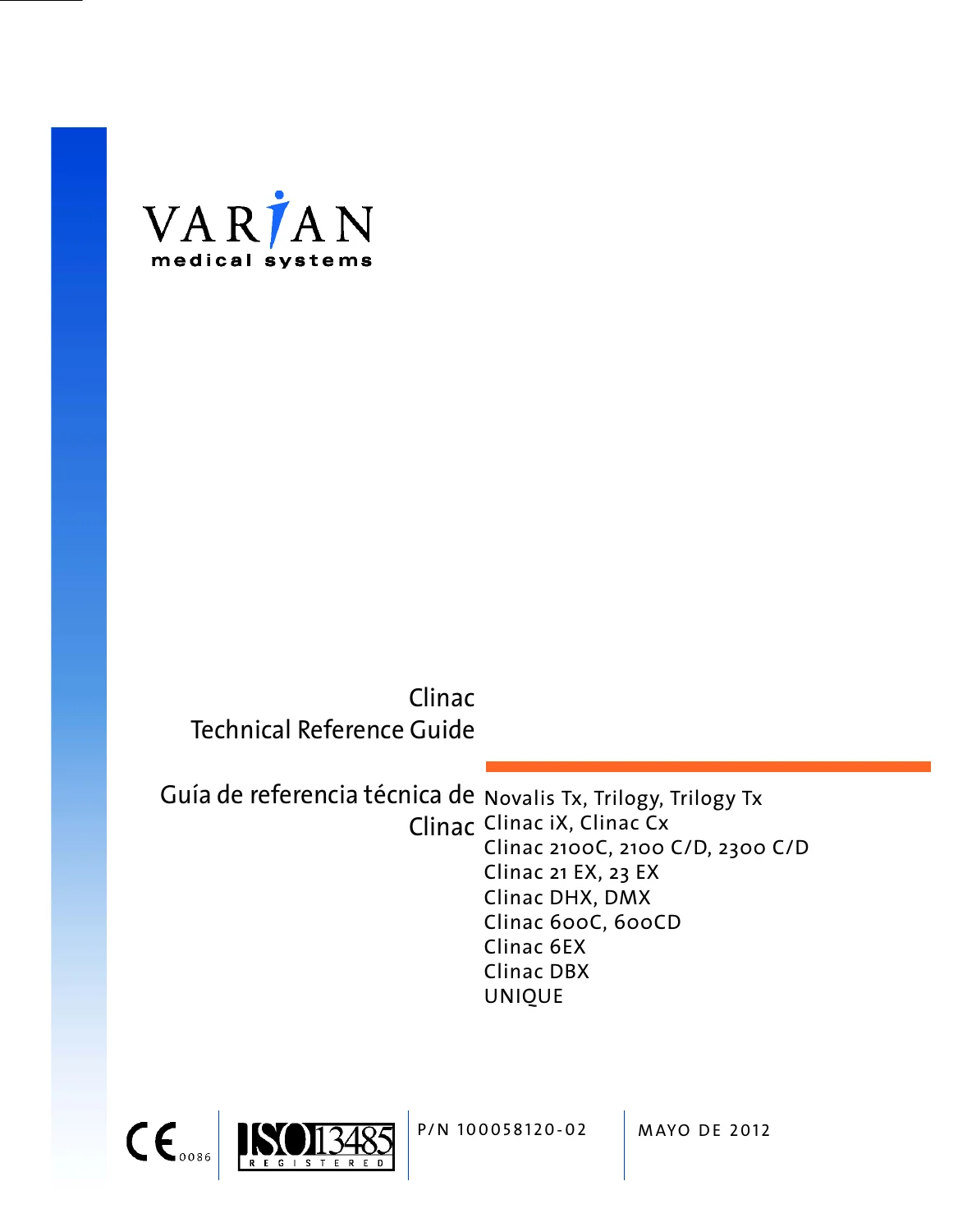
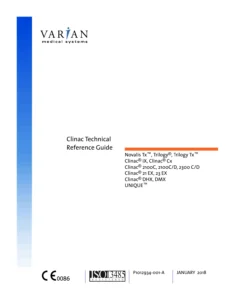
This is a 314-page Spanish-language Varian Clinac Technical Reference Guide, document P/N 100058120-02, May 2012. Unlike more generic C-Series documentation, the cover of this edition explicitly lists Clinac 6EX among the supported accelerator models.
The guide describes how to configure, test and maintain Varian high-energy and low-energy medical linear accelerators. It is intended for advanced users including physicists, dosimetry specialists and authorized service personnel, and provides detailed access to Physics Mode, Service Mode, beam-test functions, process values, calibration functions, motor parameters, communications, system logs, hand-pendant diagnostics and interlock troubleshooting.
The document states that it covers Varian medical linear accelerators using software through version 9.0, inclusive. It was published in Spanish as P/N 100058120-02 and identifies the original English publication as P/N 100054117-02.
Models Explicitly Listed on the Cover
- Novalis Tx
- Trilogy
- Trilogy Tx
- Clinac iX
- Clinac Cx
- Clinac 2100C
- Clinac 2100 C/D
- Clinac 2300 C/D
- Clinac 21 EX
- Clinac 23 EX
- Clinac DHX
- Clinac DMX
- Clinac 600C
- Clinac 600CD
- Clinac 6EX
- Clinac DBX
- UNIQUE
This explicit model list is particularly important for owners or service engineers working with the Clinac 6EX, because the 6EX designation is printed directly on this manual rather than inferred from general Low-Energy C-Series coverage.
High-Energy and Low-Energy Clinac Coverage
The guide covers both high-energy and low-energy Varian linear accelerators. It explains that installed software options and accelerator features can differ according to the specific clinical configuration, so some screens or options shown in the guide may differ from an individual machine.
Throughout the document, procedures distinguish between functions available on all accelerators and those specific to high- or low-energy systems. Low-energy-specific functions include dedicated configuration behavior, menu options, interlock distinctions and PRF Frequency information.
Who This Technical Guide Is Written For
The guide states that it is intended for advanced users of Varian high- and low-energy linear accelerators, including:
- Physicists
- Dosimetry specialists
- Authorized service personnel
Its purpose is to provide rapid and detailed access to accelerator functions, operating conditions, configuration controls and service information. This is therefore substantially more technical than a routine operator or treatment-console user guide.
Major Technical Areas Covered
- Accelerator electrical and environmental specifications
- Physics Mode access and navigation
- Default dose-rate configuration
- Time-factor settings
- Password configuration
- Maximum-dose settings
- Morning Checkout configuration
- Customer interlock configuration
- Date and time formats
- Accessories and field-related settings
- Dynamic treatment configuration
- Remote automatic motions
- Beam Delivery Time Interlock configuration
- Beam gating
- Record-and-Verify interface
- Beamstopper configuration
- EXGI
- Low Dose Rate configuration
- Small Motions
- Smart Connect
- Physics configuration backup and restoration
- Service Mode beam-test setup
- Beam control
- Interlocks, triggers and lights
- Process-data display
- Machine motor control
- Calibration of accelerator process values
- Low-energy PRF functions
- Service Mode utilities
- Communications Mode
- System, Morning Checkout, dynamic and event logs
- Transmission factors and geometrical radiation fields
- Electromagnetic compatibility information
- Hand-pendant diagnostics and error messages
- Extensive accelerator interlock troubleshooting
Physics Mode – Accelerator Configuration
The Physics Mode chapters explain how an authorized user enters Physics Mode, navigates the menus, changes accelerator configuration values and saves configuration data.
Configuration subjects include:
- Default Dose Rate
- Time Factor
- Passwords
- Maximum Doses
- Morning Checkout
- Customer Interlocks
- Date Format
- Time Format
- Accessories
- Dynamic Treatments
- Remote Auto Motions
- Beam Delivery Time Interlock
- Beam Gating
- RV / Record-and-Verify Interface
- Beamstopper
- EXGI
- Low Dose Rate
- Small Motions
- Smart Connect
The manual also explains how Physics Mode configuration data can be saved and printed.
Customer Interlock Configuration
The Physics Mode section includes configuration of Customer Interlocks. The document distinguishes between high- and low-energy accelerator behavior and states that low-energy models have a different available customer-interlock arrangement.
This section is useful for understanding how customer-defined interlocks interact with accelerator operation and how enabled/disabled status is managed in the configuration menus.
Physics Utilities, Backup and Restore
The Physics utility section covers:
- Setting system date
- Setting system time
- Backup Configuration
- Restore Configuration
- Backing up event information
- Backing up Morning Checkout logs
- Backing up Dynamic Logs
This provides technical guidance not only for changing parameters but also for preserving and restoring accelerator configuration information.
Service Mode – Beam Testing
Chapter 5 is dedicated to Service Mode beam-test menus. The guide explains Service Mode screen information, entering Service Mode, password protection and exiting Service Mode.
The SET UP menu is used to configure beam-test values, while additional menus provide direct control over beam operation and service functions.
Major Service Mode beam-test functions include:
- Selection of beam-test parameters
- Energy and operating-mode configuration where applicable
- Dose / monitor-unit related settings
- Dose-rate or pulse-related parameters
- Beam-control functions
- Beam ON/OFF control
- Interlock controls
- Trigger functions
- Lighting functions
- Real-time process monitoring
The guide specifically warns that Service Mode must never be used for clinical operation or patient treatment.
Service Mode – Process Data Display
The DISPLAY functions allow an authorized service user to view a wide range of accelerator process data while working with other Service Mode options.
Available information includes:
- Current analog-meter values
- Digital input states
- Digital output states
- Control timers
- Current drive and control status for positioning motors
- Common RAM-area information
- Secondary position readouts / SPRO
- Control-system timer status
The manual explains that these displays can remain visible while other Service Mode functions are used, allowing changes in process values to be observed in real time.
Analog Meter and Process Monitoring
The analog display includes accelerator values such as:
- Low-voltage power-supply readings
- Steering-coil current
- Beam symmetry information
- Other machine process parameters
The guide also explains the relationship between displayed readings and factory-set gain and offset values.
Motor Control and Machine Motion
The Service Mode motor section covers configuration and monitoring of machine movement. Motor-axis information can include:
- Collimator axes
- Gantry axes
- Treatment-couch axes
- Position limits
- Velocity limits
- Capture positions
- Position-readout calibration information
The guide also contains information about initiating motion during beam-on conditions where the supported configuration permits it, together with the applicable warnings and restrictions.
Calibration Menu – Process-Value Calibration
The CALIBRATION section is one of the most valuable service portions of this manual. It documents calibration-related functions for accelerator process values and associated hardware.
Coverage includes:
- Analog scaling
- Analog meter calibration
- PRO meter calibration
- Gain and offset information
- Motor parameters
- Motor position limits
- Site-specific configuration
- Service configuration data
- Saving calibration data to disk
- Velocity-check configuration
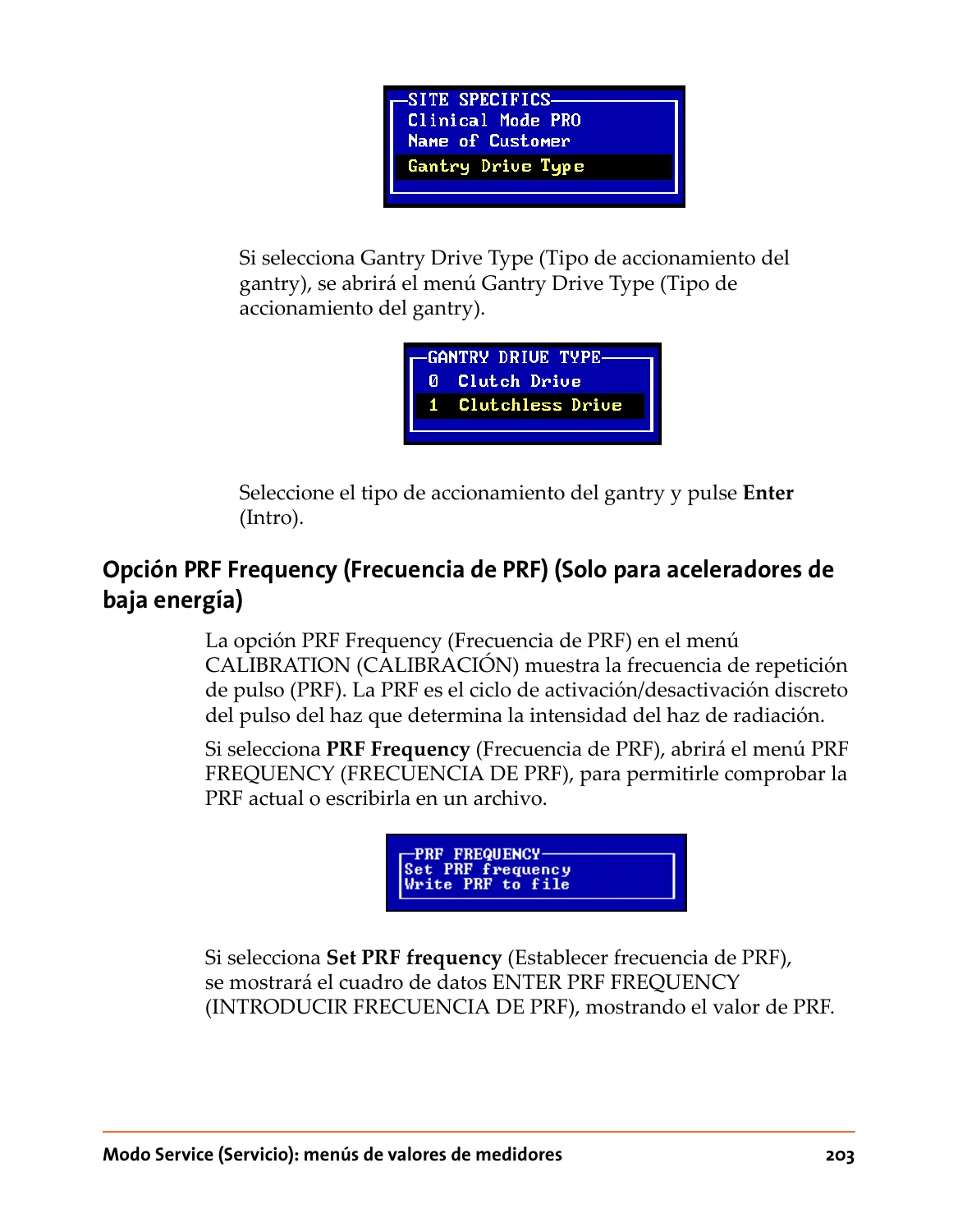
- Gantry drive-type selection for authorized service access
- Low-energy PRF Frequency functions
Some calibration and site-specific functions require service-level authorization and are not available through lower-level customer access.
Low-Energy PRF Frequency – Especially Relevant to Clinac 6EX
The guide contains a dedicated PRF Frequency option identified as being only for low-energy accelerators.
PRF is defined in the manual as Pulse Repetition Frequency, the discrete on/off cycling of beam pulses that determines radiation-beam intensity.
The Service Mode calibration section explains how an authorized user can:
- Open the PRF Frequency menu
- Display the current PRF value
- Access the PRF data display
- Write current PRF information to a file
- Save calibrated PRF data
Because the cover specifically identifies the Clinac 6EX and the guide separately documents low-energy-only PRF functions, this is one of the strongest sections for technicians seeking technical reference information related to the low-energy Clinac platform.
Service Mode Utilities
The Service Mode UTILS menu includes functions for:
- Reading I/O data
- Writing I/O data
- Setting a communications timeout
- Running an automatic self-test
- Downloading configuration data
- Restoring current configuration data
- Enabling selected hand-pendant keys
- Printing a screen copy
The manual explains how I/O-port data can be represented in hexadecimal and binary form so that individual bit states can be examined during service work.
Communications Mode and Accelerator Logs
Chapter 7 covers Communications Mode and historical operating information.
The guide includes procedures for viewing:
- System logs
- Morning Checkout logs
- Dynamic beam-delivery logs
- Event logs
This historical information can support diagnosis by helping a service engineer review what occurred before or during a reported accelerator problem.
Transmission Factors and Radiation Fields
Appendix A contains technical reference information covering:
- Transmission factor at each X-ray radiation energy
- Geometrical radiation fields
This material supplements the Service and Physics Mode chapters with radiation-related technical reference data.
Electromagnetic Compatibility
Appendix B contains electromagnetic compatibility data and guidance, including:
- Industrial, Scientific and Medical equipment classifications
- Varian EMC test declarations and guidance
- RF immunity information
- Recommended separation distances between communications equipment and the accelerator
Hand Pendant Diagnostics
Appendix C is dedicated to hand-pendant error messages and diagnostic tests.
Coverage includes:
- Hand-pendant safety information
- General diagnostic information
- Power-up diagnostic tests
- Runtime diagnostic tests
- Hand-pendant automatic self-tests
- Troubleshooting hand-pendant error messages
Extensive Interlock Troubleshooting – Appendix E
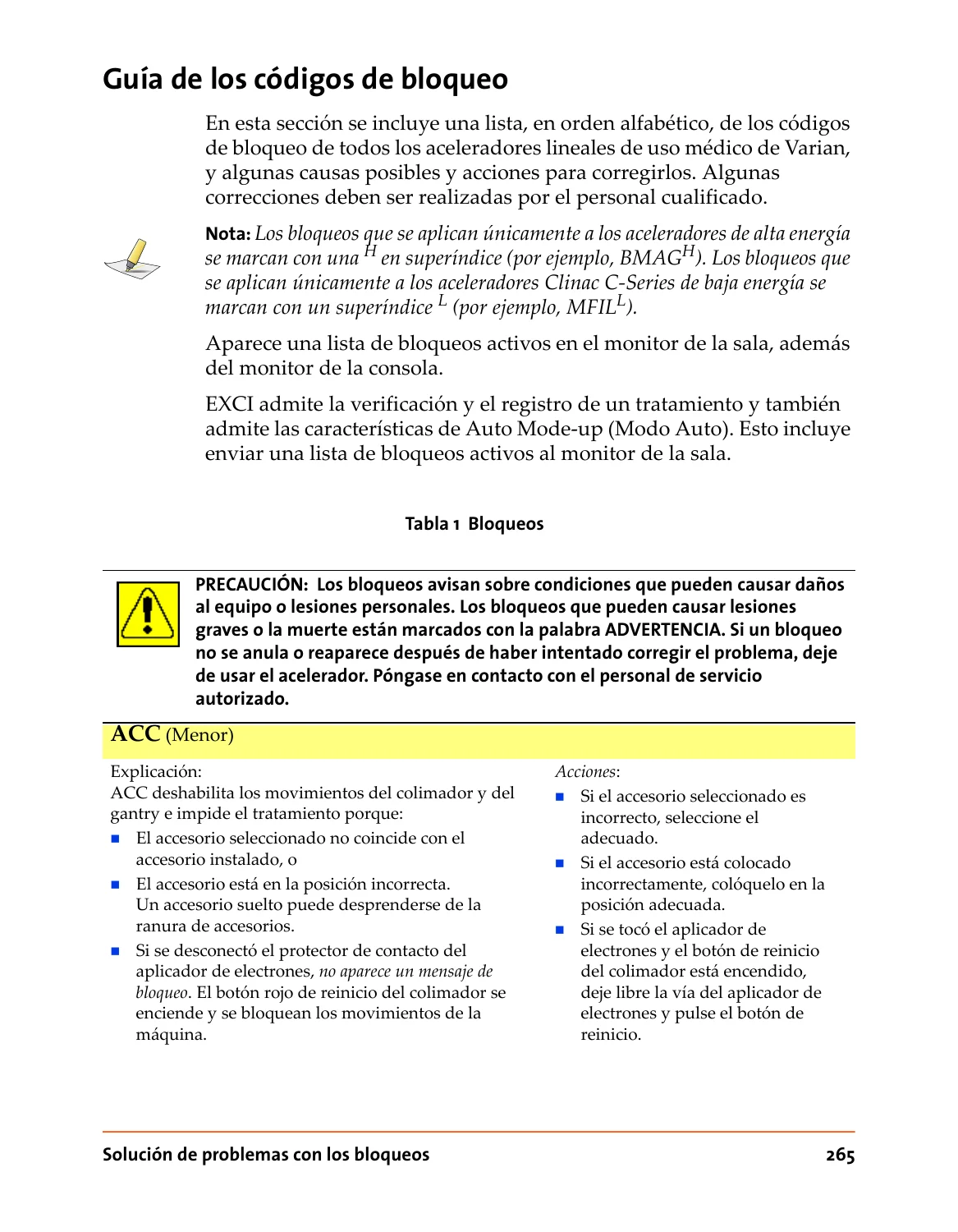
Appendix E is devoted to accelerator interlock troubleshooting. The manual defines an interlock as a condition that prevents or interrupts beam activation and explains how interlock codes appear on the accelerator display.
The guide divides interlocks into three major categories:
- Major interlocks
- Dosimetry interlocks
- Minor interlocks
The manual explains what should be recorded when an interlock occurs, including:
- Date and time
- Interlock type
- System state
- Other observations
- Monitor units already delivered when applicable
Interlock Code Guide
The interlock-code section provides an alphabetical list of interlock codes for Varian medical linear accelerators. Entries contain combinations of:
- Interlock code
- Classification
- Explanation
- Possible causes
- Corrective actions
- Warnings when qualified service personnel are required
The guide makes a particularly useful distinction between machine families:
- Interlocks applying only to high-energy accelerators are marked with a superscript H.
- Interlocks applying only to Low-Energy C-Series Clinac accelerators are marked with a superscript L.
This makes the interlock appendix especially useful when troubleshooting a Clinac 6EX or other low-energy C-Series machine, because low-energy-only conditions can be distinguished from high-energy interlocks.
Examples of Interlock Subjects
The troubleshooting table includes accelerator conditions associated with areas such as:
- Accessories and accessory positioning
- Facility air pressure
- Bend magnet systems on applicable high-energy machines
- Carousel positioning
- Collimator and gantry motion
- Door status
- Dosimetry conditions
- High-voltage and power-supply conditions
- Machine configuration
- Motion systems
- Target and beam-related conditions
- Other machine-specific operating interlocks
For many entries, the guide provides not just the code definition but also possible causes and the next action to investigate.
Why This Manual Is Particularly Valuable for Clinac 6EX
Many Clinac technical-reference documents cover the C-Series generally without explicitly identifying the 6EX. This edition is different: Clinac 6EX is printed directly on the cover as a covered model.
In addition, the guide includes low-energy-specific information throughout its Physics, Service, Calibration and interlock sections. The dedicated low-energy PRF Frequency function and the low-energy-only interlock annotations make it much more useful for 6EX work than a high-energy-only Clinac reference.
For a technician who needs information on Service Mode, beam tests, calibration, PRF, machine process values, logs, diagnostic functions and interlock troubleshooting, this guide provides substantial technical coverage in a single document.
What This Manual Is
- A Varian Clinac Technical Reference Guide
- A guide that explicitly lists Clinac 6EX
- A high- and low-energy accelerator technical reference
- A Physics Mode configuration guide
- A Service Mode beam-test guide
- A process-data and machine-status reference
- A calibration-function reference
- A low-energy PRF technical reference
- A system-log and Communications Mode guide
- A hand-pendant diagnostic reference
- An extensive accelerator interlock troubleshooting reference
What This Manual Is Not
The scope should be understood before purchase. This is a Technical Reference Guide, not every Varian service publication combined into one file.
- It is not a complete component-level electrical schematic manual.
- It is not a full circuit-board schematic collection.
- It is not a comprehensive wiring-harness diagram package.
- It is not an illustrated parts catalog.
- It is not a dedicated periodic-maintenance checklist.
- It is not a complete installation data package.
- It does not replace separate Varian publications referenced for specific subsystems or maintenance tasks.
- Although the Clinac 6EX is explicitly covered, not every menu or procedure applies identically to every model because accelerator options and clinical configurations differ.
Language – Important Before Purchase
This PDF is in Spanish. Many software-menu names, accelerator abbreviations, interlock codes and technical identifiers remain recognizable in their original English-style terminology, but the explanatory text and procedures are Spanish.
The document states that this Spanish edition was originally published in English as P/N 100054117-02. Buyers specifically requiring the English edition should not purchase this Spanish file expecting English text.
Document Details
- Title: Guía de referencia técnica de Clinac / Clinac Technical Reference Guide
- Part number: 100058120-02
- Publication date: May 2012
- Original English publication: P/N 100054117-02
- Manufacturer identified in document: Varian Medical Systems
- Software scope: Through version 9.0 inclusive
- Language: Spanish
- PDF length: 314 pages
- Clinac 6EX explicitly listed: Yes
- High-energy accelerator coverage: Yes
- Low-energy accelerator coverage: Yes
- Physics Mode: Yes
- Service Mode: Yes
- Calibration functions: Yes
- Low-energy PRF: Yes
- Communications and logs: Yes
- Interlock troubleshooting: Yes
Technical and Safety Scope
The manual contains functions intended for advanced and authorized users. It specifically warns against using Service Mode for clinical operation or patient treatment. Certain configuration, calibration and service functions require appropriate authorization and may alter machine behavior or safeguards.
The procedures should therefore be used only by personnel whose training, authorization and equipment configuration are appropriate to the work being performed.
Instant PDF Download
This product is supplied as a 314-page digital PDF in Spanish. After payment is completed, the manual can be downloaded immediately and retained as a searchable technical reference on a compatible computer, tablet or mobile device.
No printed book is shipped. You receive the downloadable PDF manual described on this page.


Reviews
There are no reviews yet.