
Varian Clinac C-Series Technical Reference Service Calibration Interlocks Guide PDF Download
Original price was: $64.95.$39.95Current price is: $39.95.
292-page English Varian Clinac Technical Reference Guide covering High-Energy C-Series and Low-Energy C-Series accelerator platforms, with Physics Mode configuration, Service Mode beam testing, calibration, process data, diagnostics, logs, low-energy PRF functions and extensive interlock troubleshooting. Instant PDF download.
Description
Varian Clinac Technical Reference Guide – 292-Page Service, Calibration & Troubleshooting Reference
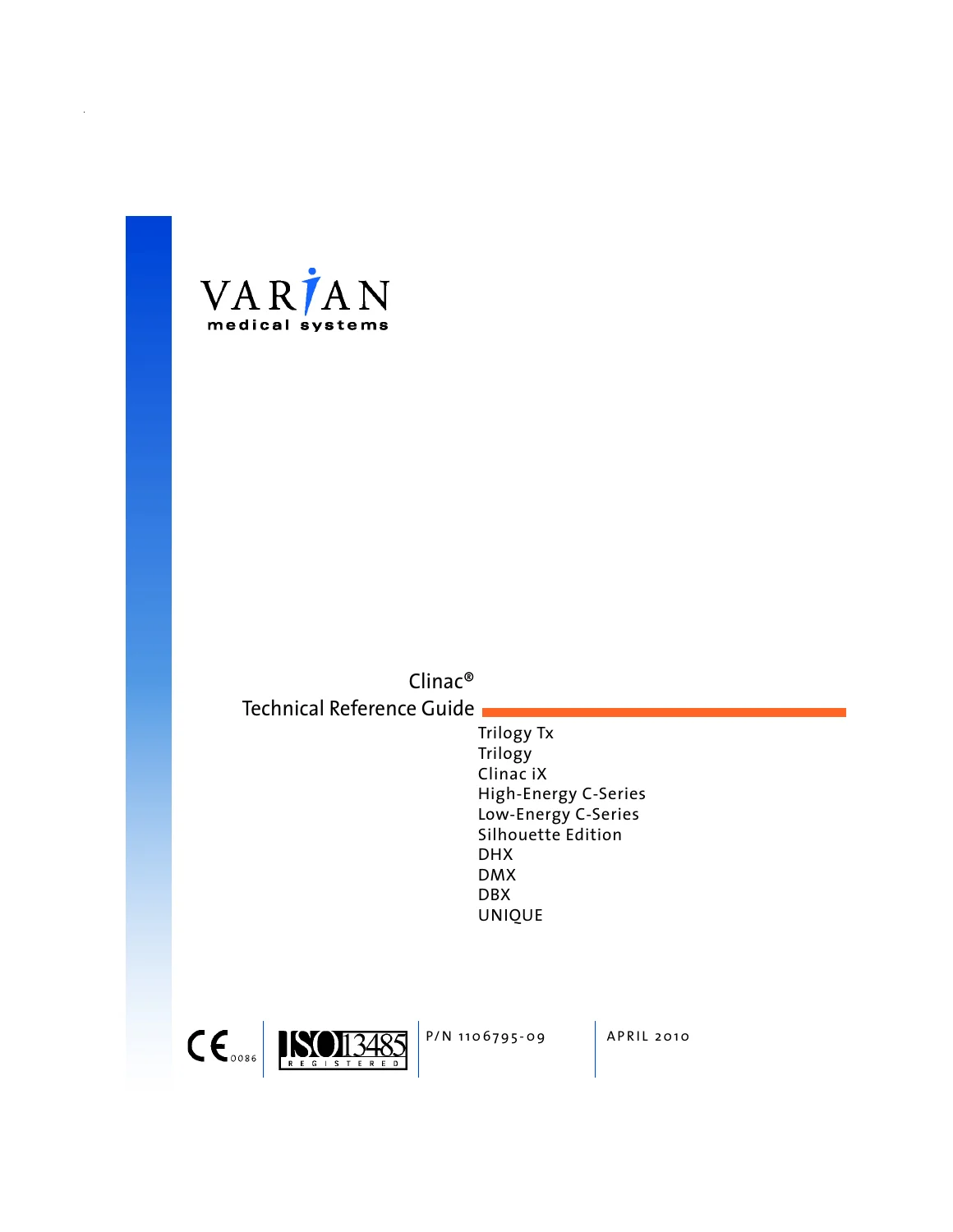
This 292-page Clinac Technical Reference Guide, published by Varian Medical Systems as P/N 1106795-09, April 2010, is a detailed technical reference for configuring, testing, calibrating and troubleshooting supported Varian medical linear accelerators. The guide covers both High-Energy C-Series and Low-Energy C-Series accelerators and provides extensive information on Physics Mode, Service Mode, beam-test functions, process values, machine motion controls, calibration functions, system logs, diagnostic tests and interlock troubleshooting.
This is substantially more technical than a basic operator guide. The document states that it is written for advanced users including physicists, dosimetrists and authorized service personnel, and its Service Mode chapters are specifically concerned with maintaining the accelerator, calibrating readouts, performing beam tests and troubleshooting machine conditions.
Equipment and Accelerator Families Listed on the Manual
- Trilogy Tx
- Trilogy
- Clinac iX
- High-Energy C-Series
- Low-Energy C-Series
- Silhouette Edition
- DHX
- DMX
- DBX
- UNIQUE
The guide repeatedly distinguishes between high-energy and low-energy accelerator functions. Low-energy machines receive their own screen examples, treatment selections, configuration behavior, interlock annotations and calibration functions where the hardware or software differs from the high-energy platforms.
Important Applicability Note for Low-Energy Clinac Owners
The PDF explicitly identifies Low-Energy C-Series coverage, but this particular 2010 edition does not print the model designation 6EX on its cover or in the searchable text. For that reason, this listing does not represent this document as a model-specific Clinac 6EX manual. Buyers requiring documentation that explicitly names a particular accelerator model should compare the document identity and listed equipment family with their machine before purchase.
The guide explains that Varian produces high-energy accelerators with multiple X-ray/electron energy groups as well as low-energy accelerators with a single X-ray energy, and that certain procedures and software options differ by accelerator configuration.
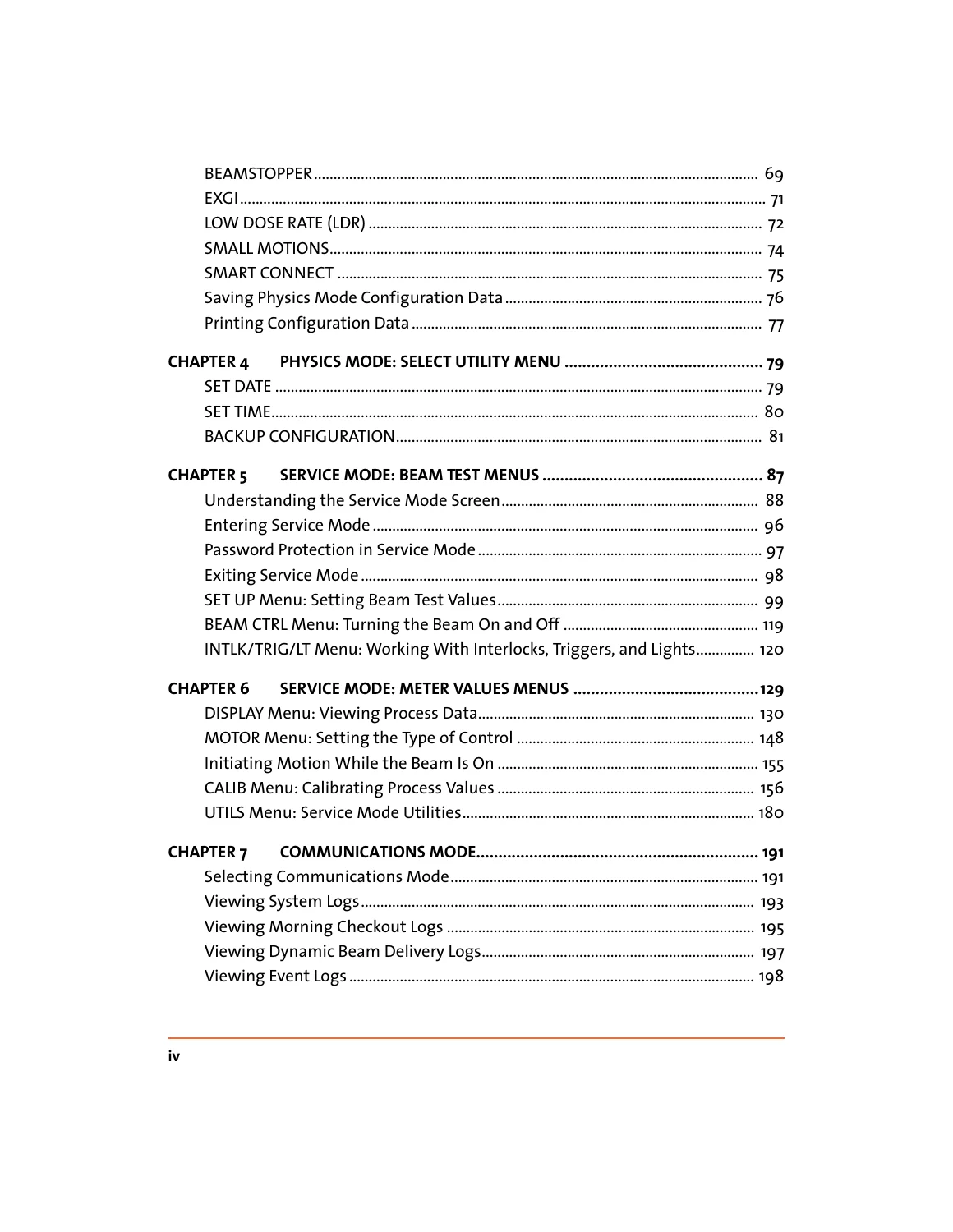
Main Technical Subjects Covered
- Accelerator operating, electrical and environmental specifications
- Physics Mode access and navigation
- Physics configuration settings
- Default dose-rate configuration
- Time-factor configuration
- Maximum-dose settings
- Morning Checkout configuration
- Customer interlock configuration
- Accessories and field-size settings
- Dynamic treatment configuration
- Remote automatic motions
- Beam-delivery time interlock settings
- Beam gating configuration
- Record-and-Verify interface settings
- Low Dose Rate configuration
- Beamstopper configuration
- Small-motion functions
- Physics configuration backup and restoration
- Service Mode beam testing
- Service Mode process-data display
- Motor and machine-axis controls
- Calibration of process values
- Position-readout calibration
- Service utilities and configuration handling
- Communications Mode and machine logs
- Hand-pendant diagnostic tests
- Interlock diagnosis and troubleshooting
- Transmission factors and geometrical radiation fields
- Electromagnetic compatibility data and guidance
Physics Mode – Configuration and Machine Setup
The Physics Mode portion explains how authorized users enter and navigate Physics Mode and how accelerator configuration values are viewed, changed and saved. Physics Mode allows the medical physicist or other authorized user to customize machine parameters to the requirements of the clinical installation.
- Default Dose Rate – viewing and configuring the default dose rate for treatments, including low-energy accelerator screen examples.
- Time Factor – configuring the factor used by the accelerator when calculating backup treatment time.
- Passwords – configuration of Dosimetry, Physics, Service and applicable treatment-mode passwords.
- Maximum Doses – viewing factory-set limits and configuring operating warning levels.
- Morning Checkout – adding, modifying, removing and arranging checkout treatment setups.
- Customer Interlocks – configuring customer-defined interlock behavior, with separate low-energy behavior where applicable.
- Accessories – configuring field sizes and target-to-tray distance where applicable.
- Dynamic Treatments – configuration associated with supported dynamic treatment functions.
- Remote Auto Motions – setup of remote machine-axis positioning.
- Beam Delivery Time Interlock, beam gating, Record-and-Verify interface, Low Dose Rate, Beamstopper and Small Motions configuration.
Service Mode – Beam Test Setup and Technical Access
A major portion of this guide is devoted to Service Mode. The document states that Service Mode is used by authorized personnel to maintain the accelerator, calibrate its readouts and troubleshoot machine operation.
The Service Mode beam-test section covers the menus and functions used to configure a controlled beam-test exposure. Parameters include treatment or test mode, energy, repetition or dose rate, dose in monitor units, exposure time, accessories and repeat-exposure functions.
The guide distinguishes the choices available on high-energy and low-energy machines and includes separate examples of the SELECT MODE menu for a Low-Energy Accelerator.
Calibration and Process-Value Functions
The CALIB section covers Service Mode functions used to examine and calibrate accelerator process values rather than merely describing normal clinical operation.
- Testing the dosimetry system
- Working with dose counters and timing values
- Viewing and calibrating position readouts
- Selecting and working with readout scales
- Analog meter gain and offset
- PRO meter gain and offset
- Motor-axis calibration and related parameters
- Dynamic Beam Delivery parameters
- Site-specific calibration and configuration information
- Saving Service Mode calibration and configuration data
- Velocity-check configuration
- Gantry-drive configuration where supported and authorized
Because accelerator configuration varies by installation, the guide explains that some options are restricted or may not appear on every machine. Certain functions require a higher service authorization or password level.
Low-Energy Accelerator PRF Reference
A particularly important section for Low-Energy C-Series users is the dedicated PRF Frequency function in the Calibration menu.
The manual defines PRF as pulse repetition frequency, the discrete beam-pulse on/off cycles that determine radiation-beam intensity. It explicitly states that this PRF option is provided only on the low-energy accelerator and is not available on high-energy machines or UNIQUE.
- Open the PRF Frequency function from the Service Mode calibration menu
- View the current PRF value
- Open the PRF frequency data display
- Write PRF information to a file
- Save calibrated PRF data
Low-energy-specific PRF references also appear in the troubleshooting material, including machine conditions that direct the user to verify or measure PRF when the fault occurs on a low-energy accelerator.
Process Data, Readouts and Machine Motion
- Viewing process data and machine status
- Displaying input and output information
- Position readout information
- Machine-axis position and motion values
- Gantry, collimator and treatment-couch motion
- Manual and automatic motion control
- Motor parameters
- Dynamic Beam Delivery parameters
- Position limits and related control values
Interlocks, Triggers and Beam-Control Troubleshooting
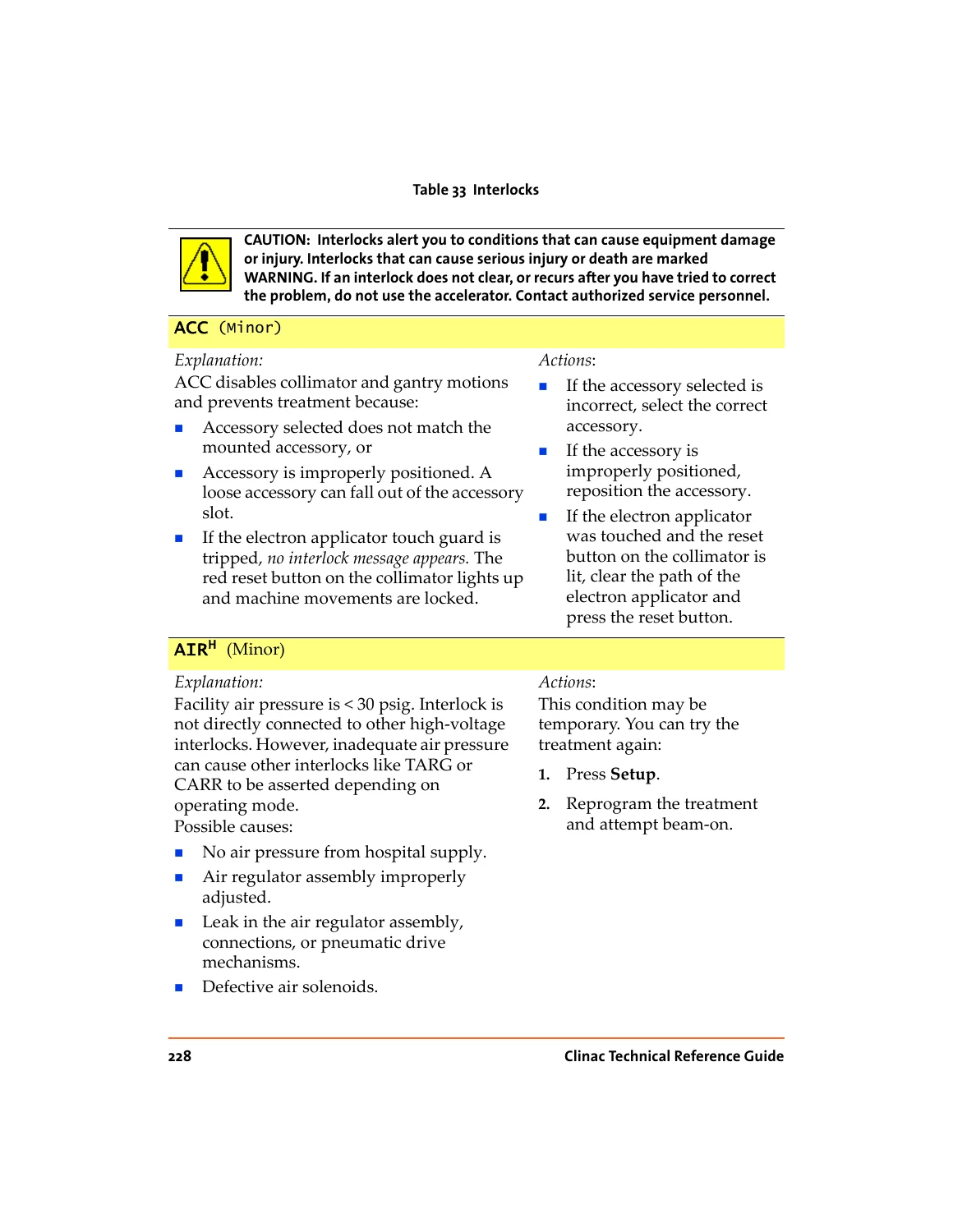
The guide contains extensive material on accelerator interlocks. Service Mode includes functions for working with interlocks and triggers, while Appendix D is devoted to Troubleshooting Interlocks.
The troubleshooting section explains three principal interlock classifications:
- Major interlocks – conditions that can indicate potentially serious accelerator faults.
- Dosimetry interlocks – conditions involving beam and dosimetry monitoring.
- Minor interlocks – machine or setup conditions that may be more readily corrected.
The alphabetical interlock guide provides technical entries containing the interlock code, classification, explanation, possible causes, checks or corrective actions and warnings where qualified service personnel are required.
Examples of systems and conditions covered through this reference include accessory positioning, air pressure, bend-magnet operation, carousel positioning, console configuration, collimator position, dosimetry, door status, high-voltage circuits, modulator conditions, motion circuits, vacuum systems, target-related conditions and other accelerator interlocks.
The document distinguishes machine families: interlocks applicable only to high-energy accelerators are marked with an H, while interlocks applicable only to the Low-Energy C-Series Clinac accelerator are marked with an L.
Communications Mode and System Logs
- Entering Communications Mode
- Viewing system logs
- Morning Checkout logs
- Dynamic Beam Delivery logs
- Event logs
- Configuration and log backup functions
This material helps authorized users correlate machine events with checkout activity, dynamic treatments and reported interlocks rather than relying only on the current console message.
Hand Pendant Diagnostics
Appendix C covers diagnostic functions and error messages for the accelerator hand pendant, including power-up diagnostic tests, runtime diagnostic tests, pendant self-tests and troubleshooting hand-pendant error messages.
Radiation Field and EMC Reference Information
- Transmission factor at each X-radiation energy
- Geometrical radiation fields
- Electromagnetic compatibility data
- Industrial, Scientific and Medical equipment classifications
- Varian EMC test declarations and guidance
- Recommended separation between communications equipment and the accelerator
Document Details
- Document: Clinac Technical Reference Guide
- Manufacturer identified in document: Varian Medical Systems, Inc.
- Part number: 1106795-09
- Publication date: April 2010
- Language: English
- PDF length: 292 pages
- High-energy coverage: Yes
- Low-Energy C-Series coverage: Yes
- Service Mode coverage: Yes
- Calibration coverage: Yes
- Low-energy PRF material: Yes
- Interlock troubleshooting: Yes
- System and event logs: Yes
- Hand-pendant diagnostics: Yes
What This Manual Is – and What It Is Not
This manual is:
- A detailed Clinac technical reference
- A guide to Physics Mode and configuration functions
- A guide to Service Mode beam-test functions
- A reference for accelerator process values and calibration functions
- A reference for low-energy-specific PRF functions
- A diagnostic reference for machine interlocks
- A guide to system logs and Communications Mode
- A hand-pendant diagnostic reference
- A technical guide covering both high- and low-energy accelerator behavior where applicable
This listing does not represent the PDF as:
- A complete component-level electrical schematic manual
- A wiring-diagram collection
- A circuit-board schematic package
- A complete illustrated parts catalog
- A model-specific 6EX manual, because 6EX is not explicitly identified in this particular edition
- A replacement for every separate Varian maintenance or product publication referenced by this guide
The guide references separate periodic-maintenance documentation, confirming that this Technical Reference Guide and dedicated periodic-maintenance publications serve different purposes. Buyers specifically seeking scheduled PMI task sheets or a dedicated maintenance checklist should obtain the applicable PMI documentation separately.
Why This Guide Is Useful
For supported Clinac installations, this manual brings together detailed information on where technical functions are located, what values and modes they control, which features differ between low- and high-energy machines, how Service Mode is organized, how calibration information is accessed and how machine interlocks are interpreted.
The extensive interlock section is especially useful because it goes beyond a displayed fault code and provides explanations, possible causes and actions. For low-energy systems, the dedicated PRF material adds machine-family-specific technical information that does not apply to high-energy platforms.
Important Service and Safety Scope
The manual repeatedly states that Service Mode, maintenance and calibration functions are intended only for appropriately trained and authorized personnel. Service Mode can alter normal operating safeguards and is not intended for clinical patient treatment. This PDF should be used as technical documentation by personnel whose training and authorization are appropriate to the equipment and procedure involved.
Instant PDF Download
This product is supplied as a 292-page digital PDF. After payment is completed, the manual can be downloaded immediately and retained as a searchable technical reference on a computer, tablet or compatible mobile device.
No printed book is shipped. You receive the downloadable PDF manual described on this page.

Reviews
There are no reviews yet.