★ TRUSTED BY 321,897+ PROFESSIONALS WORLDWIDE
🏒
Trusted Business
Verified & Licensed
πŸ›‘οΈ
Virus Free Files
100% Safe Downloads
πŸ”’
Secure Payment
SSL Protected
⚑
Instant Delivery
Available Immediately
Sale!

airBaltic Fokker 50 Operations Manual Part B – Flight Crew OMB PDF

Original price was: $34.95.Current price is: $19.95.

Complete 610-page airBaltic Operations Manual Part B (OMB) for the Fokker 50. Covers limitations, normal procedures, abnormal and emergency procedures, performance, mass and balance, loading, MEL, survival equipment, emergency evacuation, and aircraft systems. The definitive flight crew reference for Fokker 50 operations under airBaltic.

⚑
Instant PDF Download
Available immediately
πŸ’Ύ
Save to Your Device
Download & keep forever
πŸ›‘οΈ
Antivirus Scanned
100% virus-free
🌍
Trusted Worldwide
175,000+ customers

Description

airBaltic Fokker 50 Operations Manual Part B – The Complete Flight Crew Reference

This is the full airBaltic Operations Manual Part B (OMB) for the Fokker 50 (Fokker F27 Mk 050), issued in accordance with JAR-OPS 1 and the airBaltic Air Operator’s Certificate. It serves as the primary operational reference for flight crews, covering every phase of flight from pre-flight preparation through post-flight documentation, along with the limitations, performance data, and emergency procedures that govern safe Fokker 50 operations.

Whether you are a Fokker 50 pilot, a flight operations professional, an aviation researcher, or a flight simulation enthusiast seeking authentic operational detail, this 610-page manual provides the complete procedural framework used by airBaltic for its Fokker 50 fleet.

File Details

  • Manual Type: Operations Manual Part B (OMB)
  • Operator: airBaltic
  • Aircraft Type: Fokker 50 (Fokker F27 Mk 050)
  • Language: English
  • Page Count: 610
  • File Format: PDF
  • Revision: 014, effective 30.01.2006
  • Approval: Approved by airBaltic and the Civil Aviation Administration of Latvia

Aircraft Covered

The manual applies to the following airBaltic Fokker 50 registrations, each with specific configurations, weights, and equipment noted throughout:

  • YL-BAO (Serial 20189) – 50-seat configuration
  • YL-BAR (Serial 20149) – 52-seat configuration
  • YL-BAS (Serial 20162) – 46-seat configuration
  • YL-BAT (Serial 20163) – 46-seat configuration
  • YL-BAU (Serial 20216) – 52-seat configuration
  • YL-BAV (Serial 20190) – 50-seat configuration
  • YL-BAW (Serial 20148) – 52-seat configuration
  • YL-BAZ (Serial 20153) – 52-seat configuration
  • SE-LJI (Serial 20180) – 50-seat configuration

Individual aircraft differences are noted throughout the manual where systems, limitations, or procedures vary between registrations.

Chapters Covered

  • 0. General & Definitions – Administration and Control of Operations Manual Part B, List of Effective Pages, Revision Index, Distribution List, Aircraft General (fuselage, wings, tail, power plant, landing gear, flight deck, cabin), Units of Measurement, Abbreviations and Definitions
  • 1. Limitations – General Limitations, Weight Limitations (MTW, MTOW, MLW, MZFW), Speed Limitations (VMO, VA, VRA, VFE, VLO/VLE), Weather Limitations, Power Plant Limitations, Fuel System Limitations, Autopilot Limitations, Navigation Limitations (BRNAV equipment), Miscellaneous Limitations
  • 2. Normal Procedures – Pre-Flight (readiness assessment, NOTAMs, weather, alternates, fuel), Pre-Departure (pre-flight inspection, aeroplane acceptance, preparation, take-off briefing), Start-Up (normal and alternate starts), Taxi-Out (push-back, taxiing, power-back, altimeter setting), Take-Off (rolling, static, crosswind, tailwind, noise abatement), Climb, Cruise, Descent, Approach (non-precision, precision, monitored, visual, circling), Go-Around, Landing, Taxi-In, Post-Flight, Normal Checklists (abbreviated and expanded)
  • 2.4 Low Visibility Operations / CAT 2 Approach – Low Visibility Procedures, Taxi, Low Visibility Take-Off, CAT 2 Approach (limitations, additional requirements, execution), Failures during CAT 2 Approach, Simulated CAT 2 Approach Procedures, Documentation
  • 2.5 Flight Operations in Adverse Weather Conditions – Cold Weather (pre-departure, ground de/anti-icing, contaminated runways), Icing Conditions, Turbulence, Wind Shear, Extreme Wind Conditions, Hot Weather
  • 3. Abnormal & Emergency Procedures – Failure During Take-off and Landing (rejected take-off, continued take-off with failure, failure during approach), Fire and Smoke Drills (fire/smoke in compartments, engine fire), Engine Failure and Single Engine Operations, EGPWS/TAWS Warning, TCAS Warning, Incapacitation, Other Emergency and Abnormal Situations (emergency descent, distress communications, diversion guidance, anti-skid INOP, lightning strike, overweight landing, no ground idle after landing, landing with flaps less than 25, upset recovery techniques), Abnormal and Emergency Checklists (Air, Automatic Flight Control System, Electrical Power, Fire Protection, Flight Controls, Fuel, Hydraulics, Anti-Ice, Instruments/Warnings/Monitors, Landing Gear, Navigation, Doors and Windows, Power Plant, Engine, Smoke, Emergency Landing, Miscellaneous, Emergency Descent, Evacuation/On-Ground Equipment)
  • 4. Performance – GWC Procedure (take-off, landing, calculation forms)
  • 5. Flight Planning – Climb, Cruise and Descent Data, Selection of Cruise Levels, Speed/Power Settings, One Engine Inoperative Schedule, Fuel Calculation (minimum required fuel, trip time), Operational Flight Plan
  • 6. Mass and Balance / Loading – Weight and Balance Calculation System, Instruction for Completion of Mass and Balance Documentation (computer-generated and manual loadsheets), Limiting Weights and Centre of Gravity, Dry Operating Weight and Corresponding Index
  • 7. Loading – Loading Instructions, Distribution of Passengers in the Cabin, Transportation of Live Animals, Children and Disabled Persons, Electrically Driven Wheelchairs, Weapons, Radioactive Materials, Magnetic Materials, Dry Ice
  • 8. Configuration Deviation List – General Limitations, Performance Effects, Aircraft Release, CDL Items by ATA Chapter
  • 9. Minimum Equipment List (MEL) – MEL Procedure (general, purpose, scope, responsibility, definitions, rectification periods), Air Conditioning, Auto Flight Control, Communications, Electrical Power, Equipment/Furnishings, Fire Protection, Flight Controls, Fuel System, Hydraulic Power, Ice & Rain Protection, Indicating & Recording, Landing Gear, Lights, Navigation, Oxygen, Pneumatic & Bleed Air, Doors, Windows, Propellers, Power Plant, Engine Fuel & Control, Ignition, Engine Indicating, Oil, Starting, Dispatch Deviation Guide Operational Procedures, Dispatch Deviation Guide Maintenance Procedures
  • 10. Survival and Emergency Equipment – Emergency Equipment Location and Quantity (by aircraft registration), Emergency Exits, Emergency Lighting, Emergency Locator Transmitter (ELT), Instructions for Use of Emergency Equipment (life vests, flight crew oxygen system, portable fire extinguishers, escape ropes, sill raisers)
  • 11. Emergency Evacuation Procedures – General, Types of Emergency Situations, Preferred Use of Exits, Duties of All Crew Members, Orders at Emergency Situation, Cabin Preparation for Emergency Situation (passenger behaviour, emergency exit seating, brace positions), Emergency Landing (planned emergency landing, planned ditching, before landing/ditching, unprepared landing/ditching)
  • 12. Aircraft Systems – Reference to Aircraft Operations Manual for complete system descriptions

What This Manual Provides

This is not a generic aircraft handbook. It is the actual operational manual used by airBaltic flight crews to conduct Fokker 50 operations under JAR-OPS 1. Every procedure, limitation, and checklist reflects the specific configuration of the airBaltic Fokker 50 fleet, including individual aircraft differences for YL-BAO, YL-BAR, YL-BAS, YL-BAT, YL-BAU, YL-BAV, YL-BAW, YL-BAZ, and SE-LJI.

For flight crews, this manual provides the complete framework for standard operating procedures (SOPs), crew coordination concepts, and the decision-making processes used in normal, abnormal, and emergency situations. It details the exact callouts, crew duties, and handling techniques expected during every phase of flight.

For flight operations personnel, the manual offers the full context behind the limitations, performance calculations, mass and balance systems, and MEL provisions that govern daily operations. The performance section alone provides the Gross Weight Chart procedure used to determine maximum take-off and landing weights under varying conditions.

For aviation researchers and historians, this document provides a detailed snapshot of Fokker 50 operations in the mid-2000s, including the specific procedures and limitations applied by a Baltic regional operator.

Key Technical Systems Covered

The manual addresses the following Fokker 50 systems in operational detail:

  • Power Plant: Pratt & Whitney PW 125B turboprop engines, Dowty Rotol propellers, engine rating panel (ERP), electronic engine control (EEC), propeller electronic control (PEC)
  • Electrical: Integrated Drive Generators (IDG), Transformer Rectifier Units (TRU), batteries, external power, bus equipment
  • Hydraulic: Engine-driven pumps, electric pump, system accumulators, alternate flap and landing gear operation, alternate brakes
  • Pneumatic: Bleed air supply, air conditioning packs, pressurization control, airframe de-icing
  • Fuel: Main and collector tanks, fuel pumps, crossfeed system, fuel quantity indication
  • Flight Controls: Ailerons, elevators, rudder, flaps, trim systems, auto elevator feel control, flight control lock
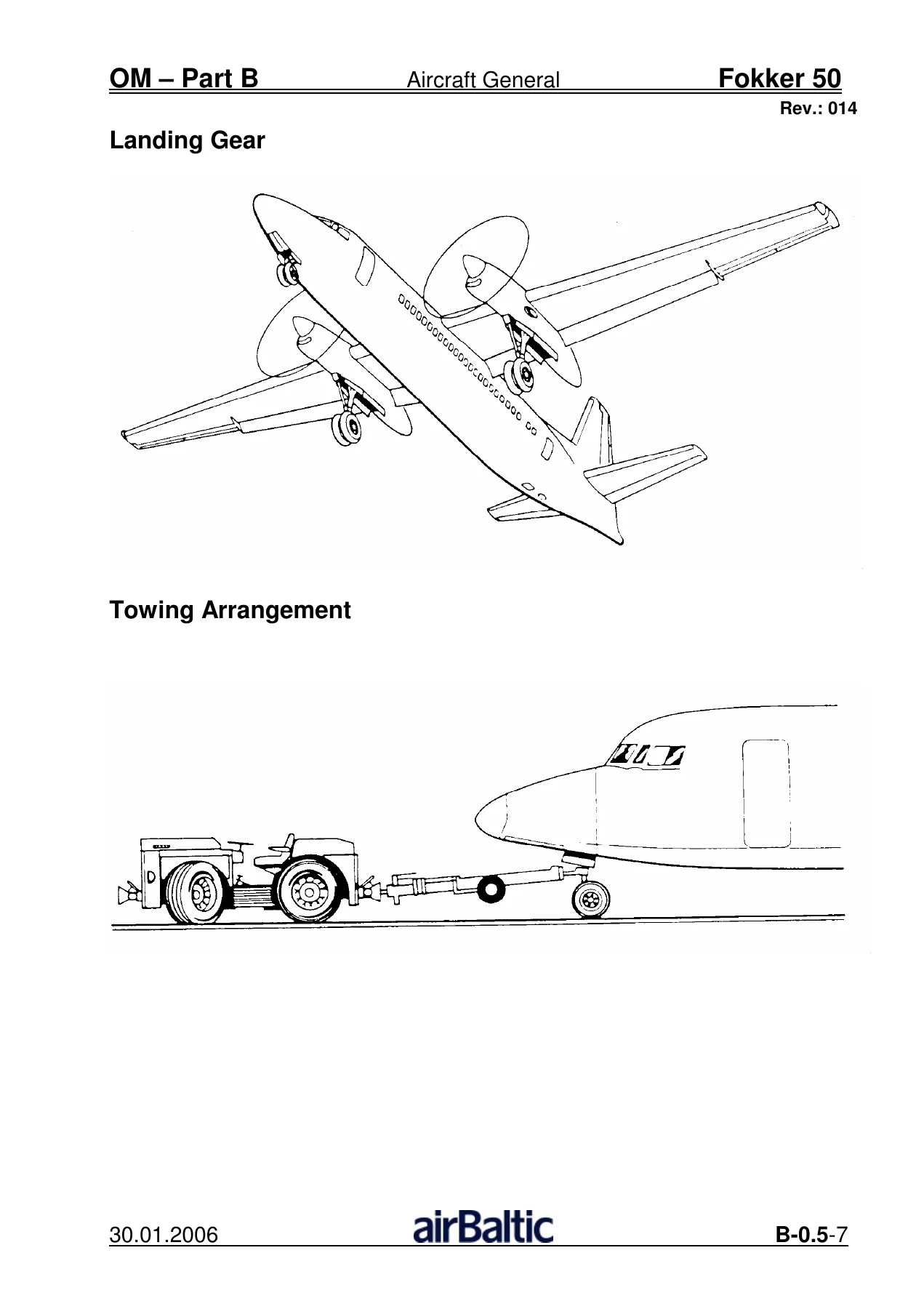
  • Landing Gear: Normal and alternate extension, nose-wheel steering, brakes, anti-skid system
  • Navigation: AHRS, EFIS, FMS, GPS, VOR, DME, ADF, ILS, marker beacon, radio altimeter
  • Automatic Flight: Autopilot, yaw damper, flight director, AFCS modes
  • Warning Systems: Integrated Alerting System, Central Annunciator Panel (CAP), EGPWS/TAWS, TCAS
  • Emergency Equipment: Life vests, oxygen systems, smoke hoods (PBE), portable fire extinguishers, escape ropes, ELT

Complete PDF Bookmark Tree

Complete Bookmarks

The complete bookmarks in the β€œairBaltic Fokker 50 Operations Manual Part B – Flight Crew OMB PDF” are as follows:

OM Part B Fokker 50p. 1
0 Administration and Controlp. 3
0.1 ADMINISTRATION AND CONTROLp. 5
0.1.1 Introductionp. 5
0.1.2 Applicabilityp. 5
0.1.3 Structure of Operations Manualp. 6
0.1.4 The common languagep. 6
0.1.5 Operations Manuals to be carriedp. 6
0.1.6 Structure of the Manualp. 6
0.1.7 Amendments and Revisionsp. 6
0.1.8 Revision Systemp. 7
0.1.9 Statement of Approvalp. 7
0.1.10 The role of Authorityp. 7
0.2 List of Effective Pagesp. 9
0.3 Revision Indexp. 11
0.4 DISTRIBUTION LISTp. 13
0.5 AIRCRAFT GENERALp. 15
FUSELAGEp. 15
WINGS AND TAIL SECTIONp. 16
POWER PLANTp. 17
LANDING GEARp. 17
FLIGHT DECKp. 23
CABINp. 26
0.6 Units of Measurementp. 49
0.7 Abbreviations and Definitionsp. 51
Ap. 51
Cp. 52
Dp. 52
Ep. 53
Fp. 53
Ip. 54
Kp. 54
Lp. 54
Mp. 55
Np. 55
Op. 55
Pp. 56
Qp. 56
Rp. 56
Tp. 57
Up. 57
Vp. 58
Xp. 58
0.8 Highlights of Revisionp. 59
1 LIMITATIONSp. 63
1.1 INTRODUCTION AND CERTIFICATION STATUSp. 65
1.1.1 Introductionp. 65
1.2 GENERAL LIMITATIONSp. 66
1.3 WEIGHT LIMITATIONSp. 66
1.4 SPEED LIMITATIONSp. 68
1.5 WEATHER LIMITATIONSp. 69
1.6 POWER PLANT LIMITATIONSp. 70
1.7 FUEL SYSTEM LIMITATIONSp. 72
1.8 AUTOPILOT LIMITATIONSp. 73
1.9 NAVIGATION LIMITATIONS, BRNAV EQUIPMENTp. 74
1.10 MISCELLANEOUS LIMITATIONSp. 75
2 Normal Proceduresp. 77
2.1 PREAMBLEp. 79
2.1.1 Generalp. 79
2.1.2 Subsection Integrationp. 79
2.1.3 Crew Co-ordinationp. 79
2.1.4 Cabin-Cockpit Communicationp. 80
2.2 NORMAL HANDLINGp. 83
2.2.1 PRE-FLIGHTp. 83
2.2.2 PRE-DEPARTUREp. 87
2.2.3 START-UPp. 95
2.2.4. TAXI-OUTp. 99
2.2.5. TAKE-OFFp. 101
2.2.6. CLIMBp. 111
2.2.7. CRUISEp. 113
2.2.8. DESCENTp. 115
2.2.9. APPROACHp. 119
2.2.9.1. Generalp. 119
2.2.9.2. Non-Precision Approachp. 122
1) DME Availablep. 123
2) DME Not Availablep. 128
Precision Approach – Cat 1 operationsp. 133
2.2.9.3. Monitored Approachp. 137
2.2.9.4. Visual Approachp. 138
2.2.9.6. Circlingp. 140
2.2.10 Go-Aroundp. 143
2.2.11. LANDINGp. 147
2.2.12. TAXI-INp. 151
2.2.13 Post-flightp. 153
2.3 NORMAL CHECKLISTp. 155
2.3.1 GENERALp. 155
2.3.2. Normal Checklistp. 158
2.3.2.1. Abbreviated Normal Checklist / Torque tablep. 158
BEFORE STARTp. 158
STARTINGp. 159
AFTER STARTp. 159
TAXIp. 159
LINE-UPp. 159
AFTER TAKE-OFFp. 160
DESCENTp. 160
APPROACHp. 160
LANDINGp. 160
AFTER LANDINGp. 161
AFTER PARKINGp. 161
FINAL STOPp. 161
Take-off Ratingp. 162
2.3.3. EXPANDED CHECKLISTp. 163
BEFORE STARTp. 163
STARTINGp. 167
AFTER STARTp. 168
TAXIp. 169
LINE-UPp. 169
AFTER T/Op. 170
DESCENTp. 171
APPROACHp. 171
LANDINGp. 172
AFTER LANDINGp. 172
AFTER PARKINGp. 173
FINAL STOPp. 174
2.4. LOW VISIBILITY OPERATIONS / CAT 2 APPROACHp. 175
2.4.1. Low Visibility Procedure (LVP)p. 175
2.4.2. Taxip. 175
2.4.3. Low Visibility Take-Offp. 176
2.4.4. Category 2 Approachp. 178
2.4.4.1 Generalp. 178
2.4.4.2 Approach planningp. 178
2.4.4.3 Pilot’s qualificationp. 178
2.4.4.4 Approach Executionp. 179
2.4.5. Failures During Cat 2 Approachp. 187
2.4.6. Simulated CAT 2 approach procedure.p. 187
2.4.7. Documentationp. 188
APPENDIX 1 Approved airports for CAT 2/3 minima:p. 189
APPENDIX 2 CAT1 / CAT 2 REQUIREMENTSp. 190
APPENDIX 3 CAT 2 PROCEDURE SUMMARYp. 191
2.5. FLIGHT OPERATIONS IN ADVERSE WEATHER CONDITIONSp. 193
2.5.1. Cold Weatherp. 193
2.5.2. Contaminated Runwaysp. 197
2.5.3. Icing Conditionsp. 200
2.5.4. Turbulencep. 203
2.5.5. Wind Shearp. 204
2.5.6. EXTREME WIND CONDITIONSp. 206
3 Abnormal & Emergency Proceduresp. 209
3.0 Preamblep. 211
3.0.1. Generalp. 211
3.0.2. Purposep. 211
3.0.3. Scopep. 211
3.0.4. Definitionsp. 211
3.0.5. Responsibilityp. 212
3.0.6. Abnormal / Emergency Situation Handlingp. 213
3.0.7. Crew Co-ordinationp. 215
3.0.8. Circuit breakers reset procedurep. 215
3.1 FAILURE DURING TAKE-OFF and LANDINGp. 217
3.1.1 Rejected Take-offp. 217
3.1.2 CONTINUED TAKE-OFF WITH FAILUREp. 219
3.1.3 Failure during approachp. 223
3.2 FIRE AND SMOKE DRILLSp. 225
3.2.1. Fire / Smoke in compartmentsp. 225
3.2.2 Engine Firep. 226
3.3 ENGINE FAILURE AND SINGLE ENGINE OPERATIONSp. 229
3.3.1 Engine Failure Before V1p. 229
3.3.2 Engine Failure After V1p. 229
3.3.3 Engine Failure During Approach and Go-Aroundp. 234
3.3.4 Single Engine Operationsp. 235
3.4 GPWS/TAWS WARNINGp. 237
3.5 TCAS WARNINGp. 239
3.5.1 Crew co-ordinationp. 241
3.6 INCAPACITATIONp. 243
3.6.1 Generalp. 243
3.6.2 Preliminary Actionsp. 244
3.6.3 If an incapacitation occurs:p. 244
3.6.4 Cabin Crewp. 244
3.7 OTHER EMERGENCY and ABNORMAL SITUATIONSp. 245
3.7.1 Emergency Descent Procedurep. 245
3.7.2 Distress Communications and Alerting ATC of Emergenciesp. 247
3.7.3 Guidance for Diversion in Case of Serious Technical Failurep. 248
3.7.4 Anti Skid INOPp. 249
3.7.5 Lighting Strikep. 249
3.7.6 Overweight Landingp. 249
3.7.7 No Ground Idle After Landingp. 250
3.7.8 Landing with flaps less than 25p. 251
3.7.9 UPSET RECOVERYp. 252
3.8 ABNORMAL and EMERGENCYp. 257
3.8.2 Emergency Checklistsp. 291
3.8.2.1 Enginep. 291
3.8.2.2 Electrical Powerp. 296
3.8.2.3 Smokep. 297
3.8.2.4 Emergency Landingp. 300
3.8.2.5 Miscellaneousp. 307
3.8.2.6 Emergency Descentp. 308
3.8.2.7 Evacuation / On ground Emergencyp. 308
3.8.1 Abnormal checklistsp. 261
3.8.1.1 Airp. 261
3.8.1.2 Automatic Flight Control Systemp. 264
3.8.1.3 Electrical Powerp. 265
3.8.1.4 Fire Protectionp. 269
3.8.1.5 Flight Controlsp. 269
3.8.1.6 Fuelp. 270
3.8.1.7 Hydraulicsp. 272
3.8.1.8 Anti-Icep. 274
3.8.1.9 Instruments, Warnings and Monitorsp. 277
3.8.1.10 Landing Gearp. 277
3.8.1.11 Navigationp. 280
3.8.1.12 Doors and Windowsp. 281
3.8.1.13 Power Plantp. 282
4 PERFORMANCEp. 309
PERFORMANCEp. 311
Appendix 1p. 313
5 FLIGHT PLANNINGp. 323
5.1 CLIMB, CRUISE and DESCENT DATA for FLIGHT PLANNINGp. 325
5.1.1 Selection of Cruise levelsp. 325
5.1.2 Speed / Power Settingsp. 326
5.1.3 One engine inoperative schedulep. 326
5.2 FUEL CALCULATIONp. 327
5.2.1 Generalp. 327
5.2.2 Minimum Required Fuel and Trip Time Calculation for planning/re-planning purposes.p. 328
5.3 OPERATIONAL FLIGHT PLANp. 329
6 WEIGHT & BALANCE / LOADINGp. 331
6.1 Mass and Balance calculation systemp. 333
6.2 INSTRUCTION FOR COMPLETION of MASS and BALANCE DOCUMENTATIONp. 335
6.2.1 Generalp. 335
6.2.2 Example of computer generated loadsheetp. 336
6.2.3 Description of the computer generated Loadsheetp. 337
6.2.4 Example of Manual Loadsheetp. 339
6.2.5 Example of Weight and Balance Data Sheetp. 340
6.2.6 Description of MANUAL LOADSHEETp. 341
6.2.7 LAST MINUTE CHANGES (LMC)
6.3 LIMITING MASSES and CENTRE OF GRAVITYp. 347
6.4 DRY OPERATING MASS AND INDEXp. 347
7 LOADINGp. 349
7.1 LOADING INSTRUCTIONSp. 351
7.2 DISTRIBUTION OF PASSENGERS IN THE CABINp. 352
7.3 TRANSPORTATION OF LIVE ANIMALSp. 352
7.4 TRANSPORTATION OF CHILDREN AND DISABLED PERSONSp. 352
7.5 TRANSPORTATION OF ELECTRICALLY DRIVEN WHEELCHAIRSp. 352
7.6 TRANSPORTATION OF WEAPONSp. 352
7.7 TRANSPORTATION OF RADIOACTIVE MATERIALSp. 353
7.8 TRANSPORTATION OF MAGNETIC MATERIALSp. 353
7.9 TRANSPORTATION OF DRY ICEp. 353
8 CONFIGURATION DEVIATION LISTp. 355
General Limitationsp. 357
Limitationsp. 357
MAINTENANCE ACTIONp. 358
23 COMMUNICATIONSp. 360
53 FUSELAGEp. 361
54 NACELLESp. 362
54 STABILIZERSp. 363
54 WINGSp. 364
9 Minimum Equipment Listp. 375
9.0 Revision Status of Minimum Equipment Listp. 377
9.0.1 List of Effective Pagesp. 377
9.0.2 Revision Indexp. 379
9.0.3 Highlights of Revisionp. 381
9.1 MINIMUM EQUIPMENT LISTp. 383
9.1.1 Minimum Equipment List Procedurep. 383
APPENDIX 1p. 392
APPENDIX 2p. 393
ATA 21 AIR CONDITIONINGp. 395
ATA 22 AUTO FLIGHTp. 401
ATA 23 COMMUNICATIONSp. 403
ATA 24 ELECTRICAL POWERp. 407
ATA 25 EQUIPMENT/FURNISHINGSp. 409
ATA 26 FIRE PROTECTIONp. 413
ATA 27 FLIGHT CONTROLSp. 415
ATA 28 FUELp. 417
ATA 29 HYDRAULIC POWERp. 419
ATA 30 ICE AND RAIN PROTECTIONp. 421
ATA 31 INDICATING AND RECORDINGp. 425
ATA 32 LANDING GEARp. 429
ATA 33 LIGHTSp. 431
ATA 34 NAVIGATIONp. 435
ATA 35 OXYGENp. 447
ATA 36 PNEUMATICp. 449
ATA 49 AUXILIARY POWER UNITp. 453
ATA 52 DOORSp. 455
ATA 56 WINDOWSp. 457
ATA 61 PROPELLERp. 459
ATA 71 POWER PLANTp. 461
ATA 73 ENGINE FUEL AND CONTROLp. 463
ATA 74 IGNITIONp. 467
ATA 77 ENGINE INDICATINGp. 469
ATA 79 OILp. 471
ATA 80 STARTINGp. 473
9.2 Dispach Deviation Guide Operational Proceduresp. 475
ATA 21 AIR CONDITIONINGp. 477
ATA 23 COMMUNICATIONSp. 481
ATA 24 ELECTRICAL POWERp. 483
ATA 26 FIRE PROTECTIONp. 485
ATA 27 FLIGHT CONTROLSp. 487
ATA 28 FUEL SYSTEMp. 489
ATA 29 OPERATIONAL PROCEDURESp. 491
ATA 30 ICE AND RAIN PROTECTIONp. 492
ATA 31 INDICATING AND REPORTINGp. 495
ATA 32 LANDING GEARp. 497
ATA 34 NAVIGATIONp. 499
ATA 36 PNEUMATIC & BLEED AIRp. 503
ATA 52 DOORSp. 505
ATA 56 WINDOWSp. 507
ATA 61 PROPELLERSp. 509
ATA 73 ENGINE & FUEL CONTROLp. 511
ATA 77 ENGINE INDICATINGp. 521
ATA 79 OILp. 523
ATA 80 STARTINGp. 525
9.3 Dispach Deviation Guide Maintenance Proceduresp. 527
ATA 21 AIR CONDITIONINGp. 529
ATA 25 EQUIPMENT / FURNISHINGSp. 531
ATA 26 FIRE PROTECTIONp. 533
ATA 27 FLIGHT CONTROLSp. 535
ATA 28 FUEL SYSTEMp. 537
ATA 29 HYDRAULIC POWERp. 539
ATA 30 ICE & RAIN PROTECTIONp. 541
ATA 31 INDICATING & RECORDINGp. 543
ATA 32 LANDING GEARp. 545
ATA 34 NAVIGATIONp. 547
ATA 36 PNEUMATIC & BLEED AIRp. 549
ATA 52 DOORSp. 551
ATA 56 WINDOWSp. 553
ATA 61 PROPELLERSp. 555
ATA 71 POWER PLANTp. 557
ATA 74 IGNITIONp. 559
10 Survival and Emergency Equipmentp. 561
10.1 EMERGENCY EQUIPMENTp. 563
10.1.1 YL-BARp. 563
10.1.2 YL-BAS, -BATp. 564
10.1.3 YL-BAU, BAW, Bp. 565
10.1.4 SE-LJIp. 566
10.1.5 YL-BAO, BAVp. 567
10.2 EMERGENCY EXITSp. 569
10.3 EMERGENCY LIGHTINGp. 571
10.4 EMERGENCY LOCATORp. 573
10.4.1 A/C: YL-BAR, BAS, BAT, BAU, BAW, and BAZp. 573
10.4.2 A/C: SE-LJIp. 574
10.4.3 A/C: YL-BAO, BAVp. 575
10.5 INSTRUCTION FOR USE OFp. 577
10.5.1 Generalp. 577
10.5.2 Flight deckp. 577
10.5.3 Life Vestsp. 578
10.5.4 Flight Crew Oxygen Systemp. 579
10.5.5 Portable Fire Extinguishersp. 586
10.5.6 Escape Ropesp. 587
10.5.7 Sill Raisersp. 588
11 EMERGENCY PROCEDURESp. 589
11.1 GENERALp. 591
11.1.1 Types of Emergency Situationsp. 592
11.1.2 Preferred Use of Exitsp. 592
11.2 DUTIES OF ALL CREW MEMBERSp. 593
11.2.1 Generalp. 593
11.2.2 After Landing/Ditchingp. 595
11.2.3 After evacuationp. 596
11.2.4 Authority of Commanderp. 597
11.3 ORDERS AT EMERGENCYp. 599
11.4 CABIN PREPARATION FORp. 601
11.4.1 Passenger Behaviourp. 601
11.4.2 Emergency Exit Seatingp. 601
11.4.3 Brace Positionsp. 602
11.5 EMERGENCY LANDINGp. 605
11.5.1 Planned emergency landingp. 605
11.5.2 Planned Ditchingp. 606
11.5.3 Before Landing/Ditchingp. 606
11.5.4 Unprepared Landing / Ditchingp. 607
12 AIRCRAFT SYSTEMSp. 609

Ideal For

  • Fokker 50 pilots and flight crews
  • Flight operations and dispatch personnel
  • Aviation training organizations and flight simulators
  • Aviation safety researchers and accident investigators
  • Flight simulation enthusiasts seeking authentic Fokker 50 procedures
  • Aviation historians studying regional airline operations

Get Instant Access to the Complete airBaltic Fokker 50 OMB

This airBaltic Fokker 50 Operations Manual Part B gives you the complete operational picture for one of the most capable regional turboprops ever built. From the limitations that keep the aircraft within its certified envelope to the emergency procedures that protect lives when things go wrong, every section is built around the practical realities of Fokker 50 flight operations.

With this manual, you can study the exact procedures airBaltic crews use for normal operations, review the performance calculations that determine safe take-off and landing weights, understand the MEL provisions that allow dispatch with inoperative equipment, and prepare for the abnormal and emergency situations that demand immediate, correct action.

The PDF is delivered instantly after payment, ready to view on any device. No shipping, no waiting, no physical media. You can print the sections you need for study or reference, or keep the entire 610-page document on your tablet or computer for quick access during training or simulator sessions.

IMAGES PREVIEW

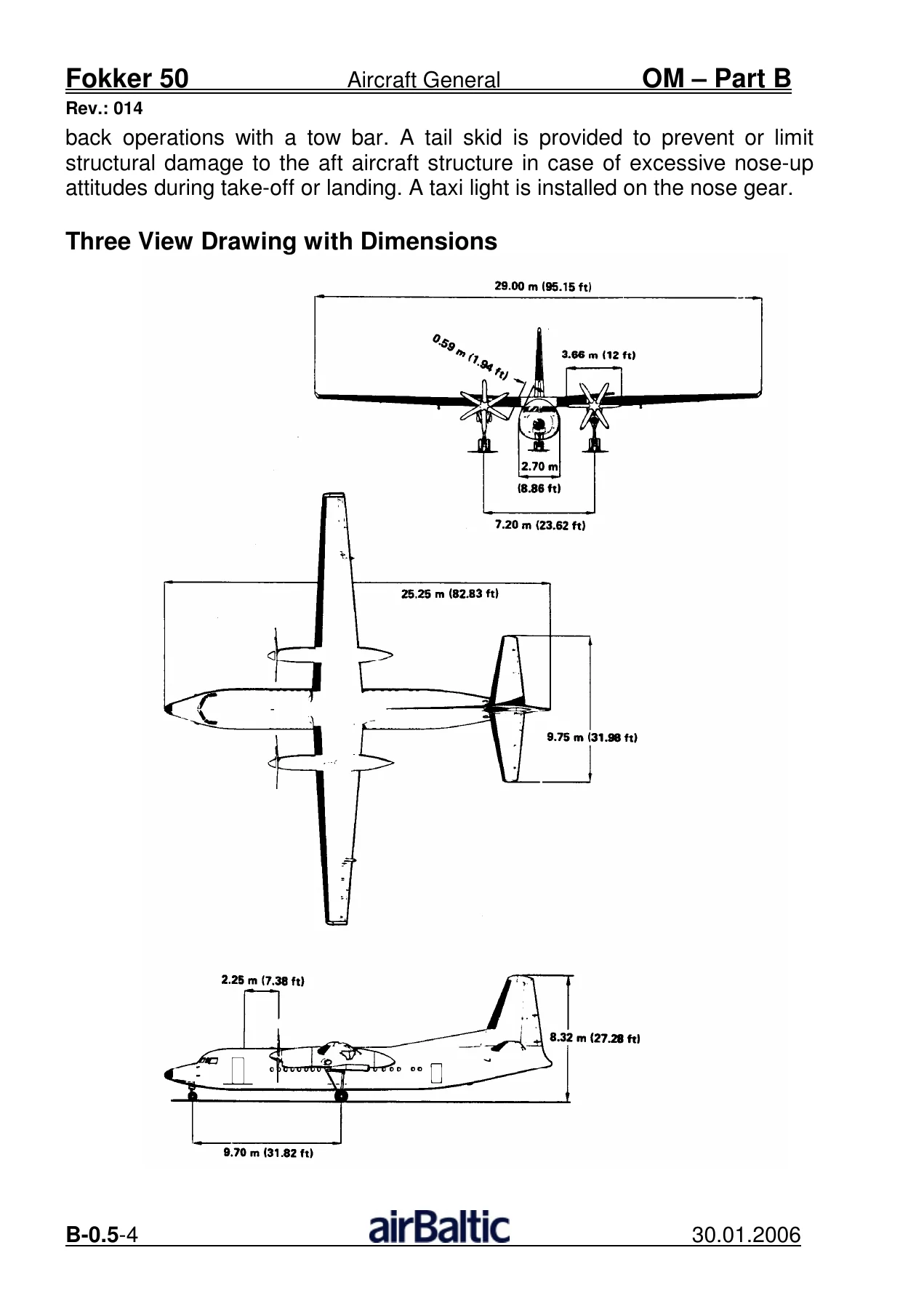
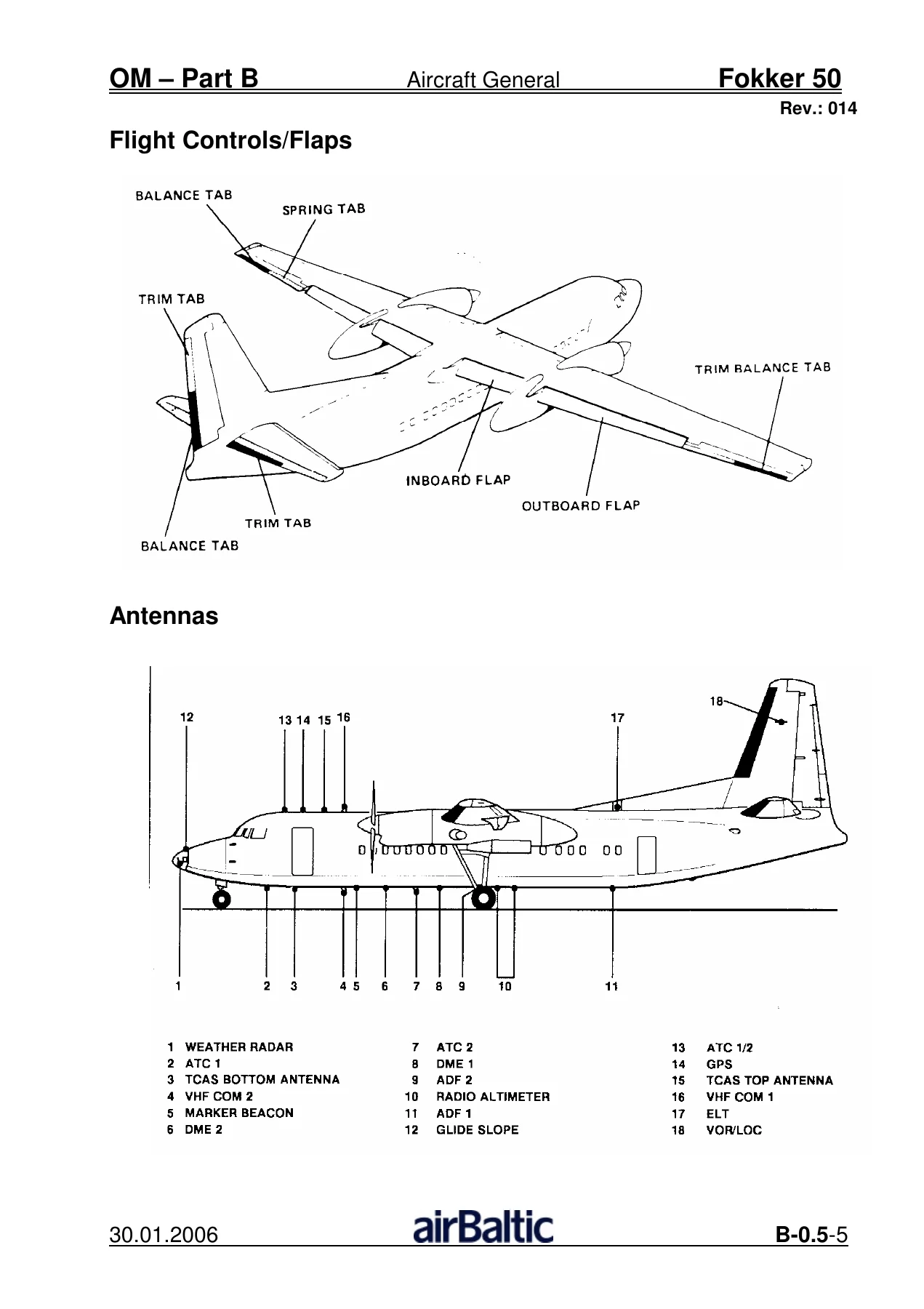
airBaltic Fokker 50 Operations Manual Part B - Flight Crew OMB PDF β€” PDF page 18 preview
airBaltic Fokker 50 Operations Manual Part B - Flight Crew OMB PDF β€” PDF page 19 preview
airBaltic Fokker 50 Operations Manual Part B - Flight Crew OMB PDF β€” PDF page 21 preview

Reviews

There are no reviews yet.

Be the first to review “airBaltic Fokker 50 Operations Manual Part B – Flight Crew OMB PDF”

What Our Customers Say

β˜…β˜…β˜…β˜…β˜… Live reviews from customers
Loading customer reviews...
0
    0
    Your Cart
    Your cart is emptyReturn to Shop
    πŸ›’
    Recently Purchased
    πŸ•’ verified order