
Canadair Regional Jet Chapter 34 Navigation Aircraft Maintenance Manual – December 2005
Original price was: $49.95.$29.95Current price is: $29.95.
Canadair Regional Jet Aircraft Maintenance Manual Chapter 34 covering navigation, flight-data, attitude, weather radar, GPWS/EGPWS, TCAS, radio altimeter, IRS, VHF/ADF/DME, Mode S, GPS and flight management systems, with component procedures, inspections and tests.
Description
Canadair Regional Jet Chapter 34 Navigation Aircraft Maintenance Manual – December 2005
The Canadair Regional Jet Chapter 34 Navigation Aircraft Maintenance Manual – December 2005 is a comprehensive Chapter 34 maintenance reference devoted to the aircraft’s navigation, flight-data, attitude, position-determining and flight-management systems. It combines system descriptions and operating theory with component locations, removal and installation procedures, inspections, cleaning and servicing instructions, adjustment and test procedures, functional and operational checks, and built-in test information. The chapter is organized by ATA-style section numbers so technicians can move from a system overview to the component or maintenance task required.
Coverage extends well beyond basic radio navigation. The chapter brings together pitot-static and temperature sensing, air data, standby instruments, attitude and heading reference, electronic flight instruments, head-up guidance, weather radar, ground-proximity warning, TCAS, radio altimetry, inertial reference, VHF navigation, ADF, DME, Mode S transponder, GPS and flight management. Many component sections also give precise aircraft effectivity and identify pre- or post-service-bulletin configurations, which is important when selecting the correct procedure for a particular aircraft.
File Details
- Manual type: Aircraft Maintenance Manual – Chapter 34 Navigation
- Brand/model: Canadair Regional Jet / CL−601R Regional Jet
- Chapter: 34 – Navigation
- Language: English
- Page count: 2594 PDF pages
- File format: PDF
- Effective-page date: Dec 10/2005
Chapters Covered
- Navigation 34−00−00
- Description and Operation
- Inspection of Antennas
- Flight Environment Data 34−10−00
- Pitot−Static and Temperature Sensing System 34−11−00, including pitot-static heads, standby pitot head, alternate S3 static port, pressure selector valve and TAT probe
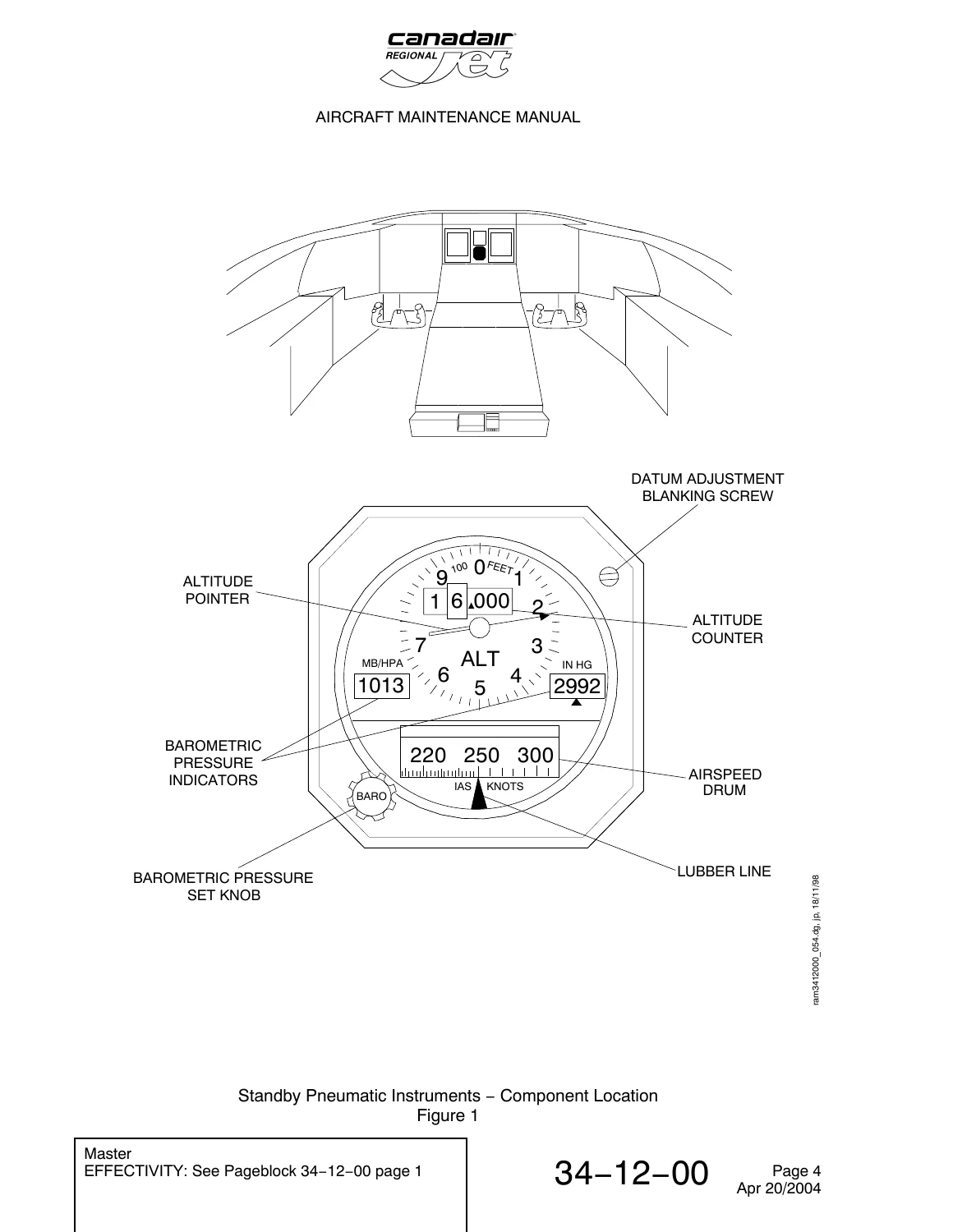
- Standby Pneumatic Instruments 34−12−00 and standby altimeter/indicated airspeed indicator
- Air Data System 34−13−00, air data computer and air-data reference panel
- Integrated Standby Instruments System (ISIS) 34−14−00 and integrated standby instrument
- Attitude and Direction 34−20−00
- Attitude and Heading Reference System (AHRS) 34−21−00, attitude/heading computer, flux detector unit, remote compensation unit, compass control panel and associated hardware
- Standby Compass System 34−22−00, standby compass and compass light assembly
- Standby Attitude Indicator 34−23−00
- Electronic Flight Instruments System (EFIS) 34−25−00, display control, source selector and display-reversion controls
- Head−Up Guidance System (HGS) 34−32−00, HGS computer, control panel, drive electronic unit, combiner and overhead unit
- Independent Position Determining 34−40−00
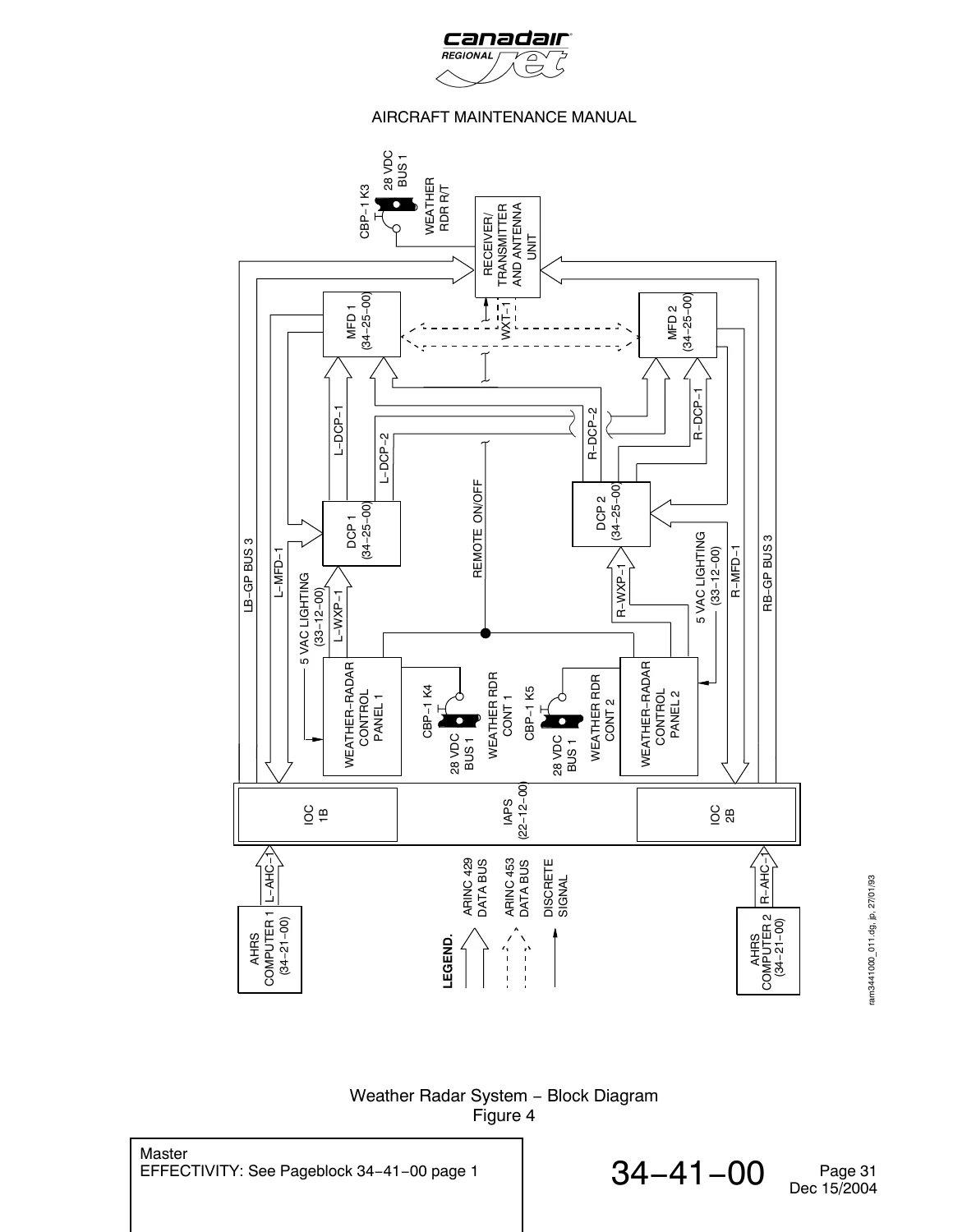
- Weather Radar System 34−41−00, receiver/transmitter and antenna assembly, control panel, system tests, inspection, lubrication and cleaning
- Ground Proximity Warning System (GPWS) 34−42−00, enhanced GPWS configurations, warning computer, switches, terrain inhibit functions, built-in tests and windshear-warning tests
- Traffic Alert and Collision Avoidance System (TCAS) 34−43−00, transceiver and directional/omnidirectional antennas
- Radio Altimeter System 34−44−00, transceiver, converter and antennas
- Inertial Reference System (IRS) 34−45−00, inertial reference unit, mode selector, rack and backup-power relay
- Dependent Position Determining 34−50−00
- VHF Navigation System 34−51−00, VHF navigation receiver, VOR/LOC antenna coupler, VOR/LOC antenna, glideslope antenna and marker-beacon antenna
- Automatic Direction Finder (ADF) System 34−52−00, receiver and antenna
- Distance Measuring Equipment (DME) System 34−53−00, transceiver and antenna
- Mode S Transponder System 34−54−00, transponder and ATC L−Band antenna
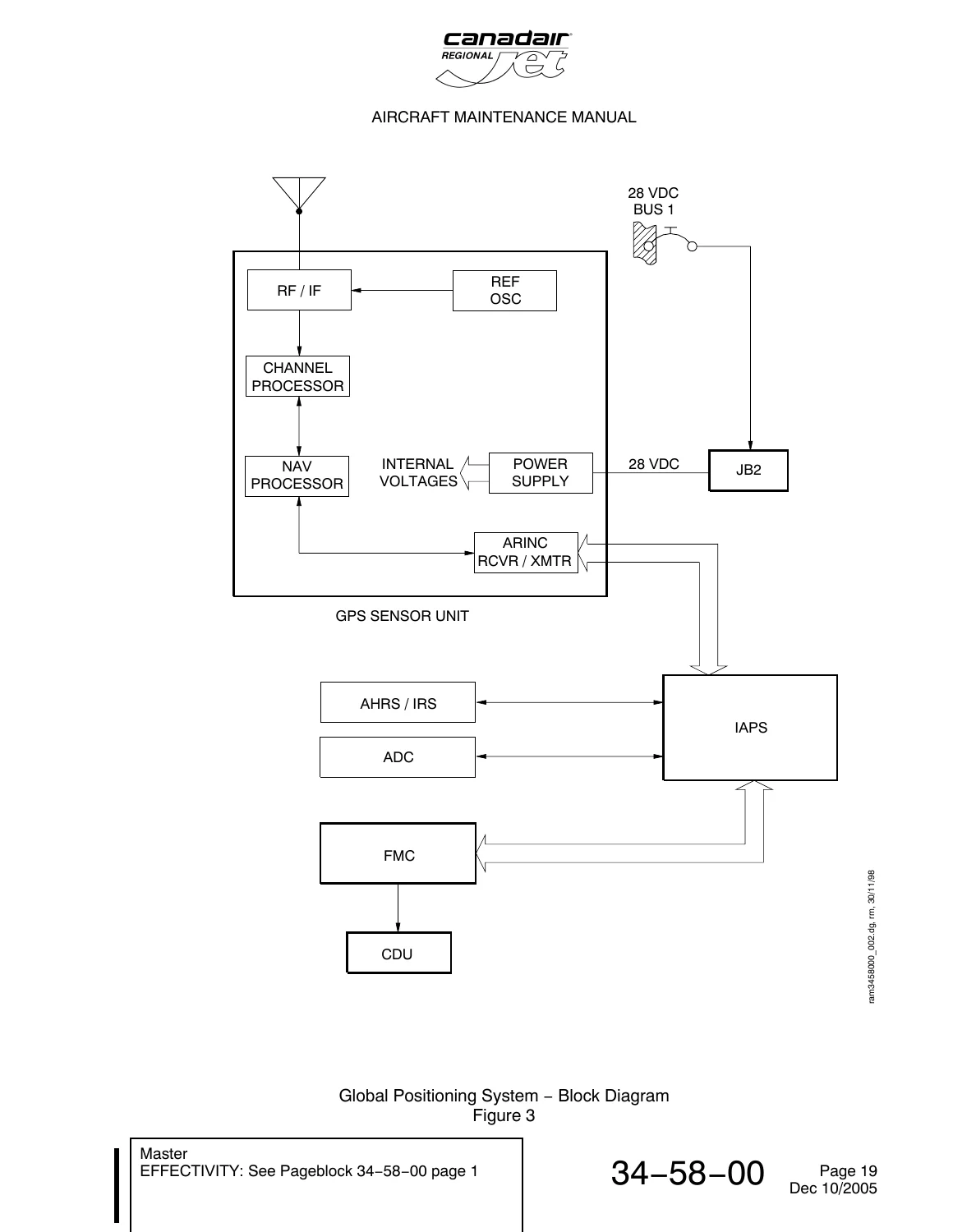
- Global Positioning System 34−58−00, GPS sensor units and GPS antenna
- Flight Management Computing 34−60−00
- Flight Management System 34−61−00
- Multifunction Control and Display Unit 34−61−01
- FMS/MDC Data Loader 34−61−04
Taken as a whole, this Chapter 34 manual provides a structured maintenance path from system theory and interfaces to physical components and task-level procedures. It is particularly useful when a navigation or indication problem spans multiple avionics systems because the chapter shows how air data, inertial reference, radio navigation, GPS, displays and flight-management functions are related.
Flight Data, Attitude and Display Maintenance
The flight-environment sections include practical work on the pitot-static and temperature-sensing system, including preparation for pressure tests, leak tests, functional checks, moisture and contamination inspections, drain inspections, line contamination removal, drain cleaning and nitrogen purging. Separate component tasks cover removal, installation and inspection of the pitot-static head, standby pitot head, alternate static port and TAT probe. The air-data material then follows the information into the air data system, with functional and system tests, air-data-computer checks, ADC switching tests, altimeter scale-error checks and MACH/airspeed indication checks.
Standby instrumentation is treated as both individual equipment and integrated systems. The manual covers standby pneumatic instruments and the standby altimeter/indicated airspeed indicator, as well as the integrated standby instrument system. The attitude-and-direction portion develops this further through AHRS, standby compass, standby attitude and EFIS. Procedures include removal and installation of computers, panels, sensors and indicators; compass compensating and residual swings; operational and functional testing; and checks after events such as a lightning strike.
The EFIS material includes primary and multifunction display operation, display-control functions, source selection, reversion switching, built-in tests and failure indications. For equipped aircraft, the head-up guidance system section describes the HGS and gives maintenance tasks for the HGS computer, control panel, drive electronic unit, combiner and overhead unit. The manual also identifies aircraft-specific effectivity for these configurations rather than treating every installation as identical.
Weather, Terrain, Traffic and Position Systems
The Canadair Regional Jet Chapter 34 Navigation Aircraft Maintenance Manual – December 2005 includes extensive independent-position and hazard-awareness coverage. Weather radar information explains system components and operation, including basic radar principles, antenna scanning, inputs and outputs, annunciations, failure indications, modes, gain, ground-clutter suppression, tilt, autotilt, stabilization, sector scan, transfer and range control. Maintenance procedures include system and functional tests, receiver/transmitter and antenna adjustment, drive-assembly inspection, lubrication and cleaning, and control-panel testing.
GPWS and enhanced GPWS material includes system description, computer and switch removal/installation, built-in tests, operational tests, functional windshear-warning tests and configuration-sensitive procedures. The chapter also includes loading application software or a terrain database through the applicable PCMCIA-card procedure. TCAS coverage addresses the transceiver, directional and omnidirectional antennas, operational and functional testing, while the radio-altimeter section covers the transceiver, converter, antennas, indications, self-test and failure indications.
The inertial-reference material explains IRU inputs and outputs, operating modes, attitude and heading data, drift error, cooling, BITE tests and power supply, together with removal/installation and operational tests of the IRU, mode selector and related hardware. This makes the chapter useful not only for replacing a line-replaceable component but also for tracing how navigation data moves among the IRS, flight-management, display and other aircraft systems.
Radio Navigation, GPS and Flight Management
Dependent-position navigation includes the VHF navigation system with VOR, localizer, glideslope and marker-beacon functions. The manual covers receiver operation and status, station and frequency selection, bearing-source selection, display indications, power supply and associated antennas and couplers. ADF sections address modes, tone, bearing and frequency selection, self-test and failure indications. DME information includes frequency selection, hold, station identification, distance and time-to-go indications, status display, failure indication and system testing. Mode S transponder coverage includes mode and code selection, RTU control, reply indication, aircraft-identification strapping, the TCAS interface, altitude-reporting tests and ATC L-band antenna procedures.
GPS sections describe the sensor unit and antenna, theory and modes of operation, the FMS/GPS interface, crew-awareness indications, GPS status and diagnostics. Operational-test procedures are provided for different single- and dual-GPS/FMS combinations, together with sensor-unit and antenna removal/installation.
The flight-management portion covers the control display unit, flight management computer and portable data loader, with system interfaces, controls and displays, flight plans, navigation/EFIS displays and power supply. The FMC functions described include flight-plan management, CDU page generation, database management, navigation-sensor control, data-loader management, built-in test/self-monitoring, integrated navigation calculations, lateral guidance and radio-frequency management. The manual also covers functional FMS testing, CDU removal/installation and operational testing, plus the FMS/MDC data-loader section.
Maintenance Procedures and Effectivity
This is a maintenance-oriented technical chapter rather than a short operating guide. Across the systems, task types include description and operation, maintenance practices, servicing, removal/installation, adjustment/test, inspection/check and cleaning. Procedures frequently include job set-up, tools and equipment, circuit-breaker precautions, access requirements, installation steps and close-out actions. System sections also contain component-location indexes, diagrams, block diagrams, instrument illustrations and test sequences that help connect the written task to the installed equipment.
Buyers should note that component and system effectivity varies throughout Chapter 34. Individual sections identify applicable aircraft numbers and, where relevant, pre- or post-service-bulletin status such as SB601R references. For maintenance use, follow the effectivity stated in the applicable pageblock and task before applying a procedure to a specific aircraft configuration.
Work from the Correct Navigation Maintenance Data
With the Canadair Regional Jet Chapter 34 Navigation Aircraft Maintenance Manual – December 2005, technicians can work through navigation-related inspection, component replacement, cleaning, adjustment, operational checking, functional testing and system diagnosis using the procedures and configuration information provided in the chapter. That matters on interconnected avionics systems where the correct effectivity, test sequence, interface and installation procedure can be as important as identifying the component itself. The manual is supplied as an instant PDF download after payment, with no shipping delay; it can be opened on compatible computers, tablets and phones and printed for workshop reference.

Reviews
There are no reviews yet.