★ TRUSTED BY 321,897+ PROFESSIONALS WORLDWIDE
🏒
Trusted Business
Verified & Licensed
πŸ›‘οΈ
Virus Free Files
100% Safe Downloads
πŸ”’
Secure Payment
SSL Protected
⚑
Instant Delivery
Available Immediately
Sale!

Volvo Penta 4.3L 5.0L 5.7L 8.1L SX-A DPS-A Operator Manual – PDF Download

Original price was: $34.95.Current price is: $19.95.

Complete Volvo Penta operator manual covering 4.3L, 5.0L, 5.7L, and 8.1L gasoline engines with SX-A and DPS-A sterndrives. Includes operation, maintenance schedules, fault code register, troubleshooting, and full technical specifications.

⚑
Instant PDF Download
Available immediately
πŸ’Ύ
Save to Your Device
Download & keep forever
πŸ›‘οΈ
Antivirus Scanned
100% virus-free
🌍
Trusted Worldwide
175,000+ customers

Description

Volvo Penta 4.3L 5.0L 5.7L 8.1L SX-A DPS-A Operator Manual

This Volvo Penta operator manual covers the 4.3L, 5.0L, 5.7L, and 8.1L gasoline marine engines paired with SX-A and DPS-A sterndrives. It is the complete operator’s guide for running, maintaining, and troubleshooting these Volvo Penta power packages, with model-specific procedures and specifications throughout. Whether you own a boat powered by a 4.3GXiE-M, 5.0GXiE-M, 5.7GiE-300-M, 8.1GiE-M, or any of the freshwater-cooled variants, this manual gives you the factory guidance you need.

File Details

  • Manual Type: Operator’s Manual
  • Brand: Volvo Penta
  • Covered Engines: 4.3L, 5.0L, 5.7L, and 8.1L gasoline (EFI)
  • Covered Drives: SX-A and DPS-A sterndrives
  • Language: English
  • Page Count: 180
  • File Format: PDF
  • Publication Reference: 47700386
  • Date: 06-2009

Chapters Covered

  • Foreword β€” model identification, warranty, Volvo Action Service
  • Safety Information β€” general safety, carbon monoxide, fire and explosion, batteries, hot surfaces, chemicals
  • Introduction β€” dealer network, consumer affairs
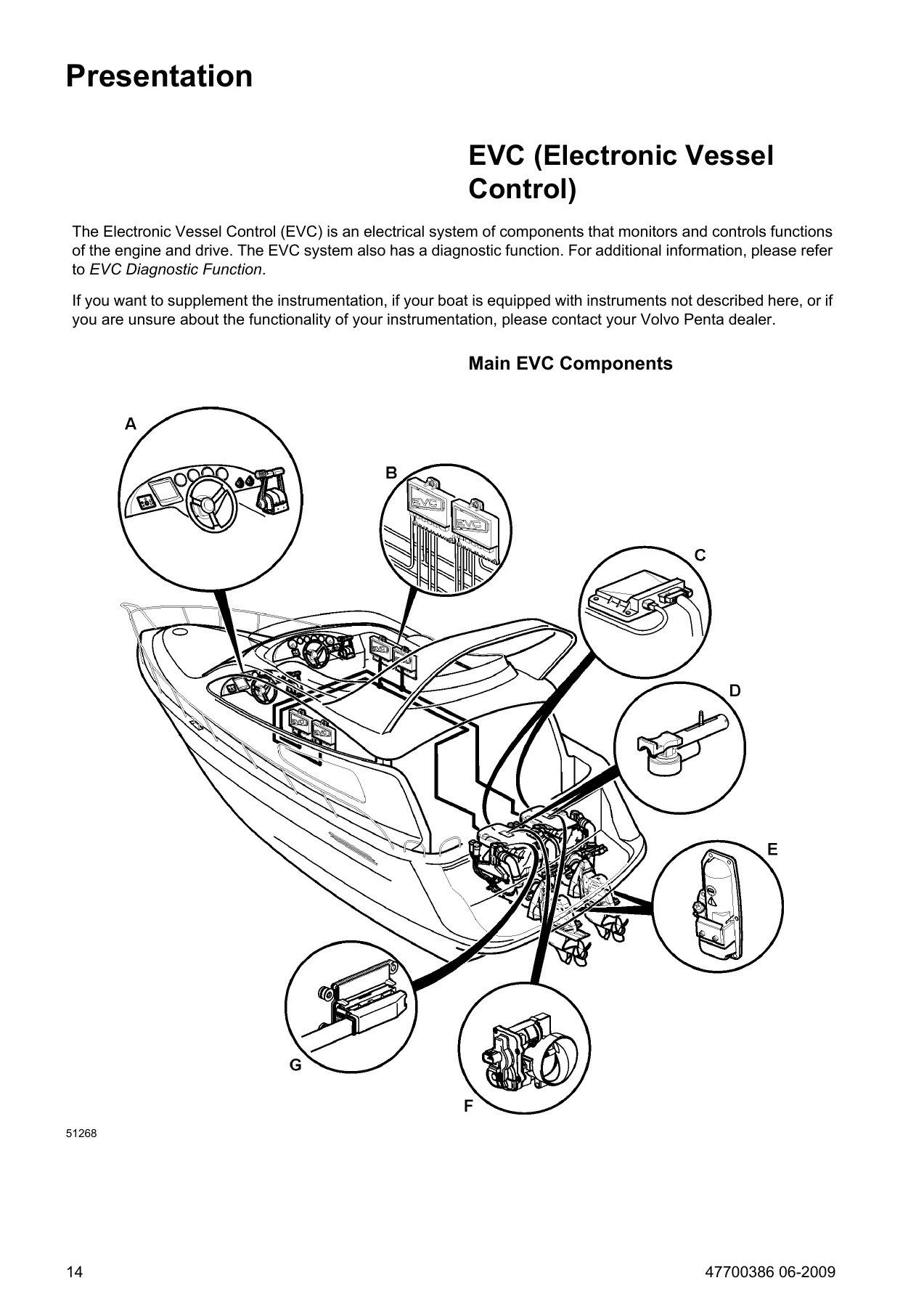
  • Presentation β€” EVC (Electronic Vessel Control), stations
  • Instruments and Controls β€” gauges, alarm displays, control panels, EVC menus, displays, power trim
  • Optional β€” ACP (Active Corrosion Protection)
  • Starting β€” before starting, static water line, starting procedures
  • Operation β€” maneuvering, trim, shifting, station handling, joystick, special conditions
  • Engine Shutdown β€” stopping, engine flush, draining, trailering
  • Fault Code Register β€” fault codes, symptoms, EVC actions, operator actions
  • In Case of Emergency β€” running aground, auxiliary batteries, propeller replacement
  • Troubleshooting β€” engine troubleshooting guides
  • Maintenance Schedule β€” owner’s checklists, scheduled maintenance
  • Maintenance β€” serpentine belt, anodes, fuel system, cooling system, electrical system, drive
  • Storage β€” winterization, short and long term storage, bringing out of storage
  • Calibration and Settings β€” EVC settings, joystick calibration
  • Technical Data β€” engine specs, oil, fuel, electrical, sterndrive data
  • Alphabetical Index

This operator manual gives you the full scope of Volvo Penta’s factory guidance for the 4.3L through 8.1L gasoline engine range and their SX-A and DPS-A sterndrives. It opens with model identification tables that map each displacement to its specific model designation and specification number, so you can confirm exactly which engine and drive combination you are working with before turning a wrench. The safety chapter covers carbon monoxide risks specific to marine operation, fuel handling, battery precautions, and the danger zones around the serpentine belt system. From there, the manual walks through the EVC electronic vessel control system, including the main helm station and secondary stations, the control panel functions, the various display types, and the multi-window information pages that show engine speed, fuel economy, trip data, and vessel information.

The operation chapters are where the manual earns its keep for anyone running these engines. You get detailed procedures for power trim and tilt β€” including the trim, beach, and tilt ranges β€” plus the Power Trim Assistant calibration. Shifting and speed control procedures cover both single and twin engine installations, with specific guidance on maneuvering with control levers, station handling, and the joystick docking function for boats equipped with a docking station. The manual also addresses special boating conditions including freezing temperatures, shallow water operation, high altitude, and salt water use, each with the specific precautions Volvo Penta recommends for that environment.

The Fault Code Register is a particularly practical section. It lists fault codes alphabetically with symptom descriptions, what EVC does in response, and the exact operator actions to take β€” whether that means checking battery fluid, inspecting the shift cable attachment points, or contacting a dealer. Faults covered include battery voltage, check engine, check EVC system, check joystick, check multilink, check shift actuator, check steering wheel, coolant temperature, engine oil pressure, engine speed, exhaust temperature, fuel pump relay, key failure, lever calibration, power relay, power trim faults, start relay, and steering faults. Each entry includes the warning lamp color, whether an audible alarm sounds, and the pop-up text that appears on the EVC tachometer display.

Maintenance and Troubleshooting

The maintenance schedule is organized into owner checklists and scheduled service intervals. Owner checks cover before-each-use items like coolant level, engine oil, fuel system leaks, anodes, power trim operation, emergency stop switch, and power steering fluid. Monthly checks cover batteries, drive unit oil, exhaust hoses and bellows, and prop shaft lubrication. The scheduled maintenance section β€” annual or every 100 hours β€” covers serpentine belt inspection, PCV valve, oil and filter changes, fuel filter replacement, exhaust manifold and riser inspection, sea water pump impeller, spark plugs, distributor cap and rotor, engine computer codes, and shift cable replacement. Sterndrive service includes anodes, bellows, U-joint and gimbal bearing, gear oil changes, and U-joint shaft spline lubrication.

Troubleshooting guides are broken down by symptom: engine will not crank, engine cranks but will not start, hard starting (cold and hot), engine runs rough, engine noises and vibrations, engine overheats, engine dies out, loss of fuel, loss of ignition, engine won’t reach operating RPM, low oil pressure or engine knock, and low battery voltage after short storage. Each section lists specific checks β€” fuel system, ignition circuit, starter circuit, cooling system, mountings, alternator, and sterndrive β€” so you can isolate the cause without reading through every possibility.

Technical Data

The technical data chapter provides full engine specifications for each model: bore and stroke, cylinders, displacement, firing order, full throttle operating range, idle RPM, fuel system details, electrical system output, ignition timing, spark plug gap and torque, cooling system components and thermostat ratings, oil filter type, oil capacity, and minimum oil pressure at specific RPMs. Sterndrive oil capacity is listed for both SX-A (2.58 quarts) and DPS-A (2.38 quarts) models, along with the specified Volvo Penta SAE 75W/90 GL-5 synthetic gearcase lubricant. Fuel requirements including octane ratings and ethanol-blended fuel guidance are also included.

What This Manual Enables You to Do

With this Volvo Penta operator manual on hand, you can confidently handle routine maintenance and service procedures for your 4.3L, 5.0L, 5.7L, or 8.1L engine and its SX-A or DPS-A sterndrive. You can interpret alarm displays and fault codes, perform the correct troubleshooting steps, and know when a problem requires a dealer. You can winterize your engine and drive properly, bring it out of storage, and handle emergency situations like running aground or needing a jump start. The manual also covers propeller replacement for both SX-A and DPS-A drives, including the specific torque values and installation sequences that prevent damage.

Because this is a PDF, you can print the pages you need, view it on any device, and keep it handy at the dock or in the engine bay. No shipping, no waiting β€” the download link is available immediately after purchase. Whether you are a boat owner performing your own maintenance or a technician who needs the factory procedures and specifications, this manual puts the information right where you need it.

Complete PDF Bookmark Tree

Complete Bookmarks

The complete bookmarks in the β€œVolvo Penta 4.3L 5.0L 5.7L 8.1L SX-A DPS-A Operator Manual – PDF Download” are as follows:

47700386_US.pdf
Forewordp. 4
Modelsp. 4
Safety Informationp. 6
General Safety Informationp. 6
Safety Precautions While Operating the Boatp. 8
Basic Safety Rules of Boatingp. 8
Carbon Monoxidep. 9
Stationary Operationp. 11
Underway Operationp. 12
Backdrafting (Station Wagon Effect)p. 12
Maintenancep. 13
Introductionp. 14
Warranty Informationp. 14
Owner’s Identification Cardp. 14
Volvo Action Service (VAS)p. 14
Volvo Penta Dealer Networkp. 15
Toll-free Dealer Locator Servicep. 15
Volvo Penta on the Internetp. 15
Consumer Affairs Departmentp. 15
Presentationp. 16
EVC (Electronic Vessel Control)p. 16
Main EVC Componentsp. 16
Instruments and Controlsp. 19
Start/Stop Panelp. 19
Gaugesp. 20
Optional Gaugesp. 21
Alarm Display (Optional)p. 22
General Warning: Red or Amber Indicatorp. 22
Oil Pressure: Red Indicatorp. 22
Water in Fuelp. 22
Battery: Amber Indicatorp. 23
Coolant Temperature: Red Indicatorp. 23
Coolant Levelp. 23
Oil Levelp. 23
Control Panelp. 24
Docking Station Panelp. 25
EVC System Displayp. 26
EVC Basic Windowp. 27
Multiple Window Displayp. 28
MULTI Page (Button 2)p. 30
Trip Page (Button 3)p. 31
Graph Page (Button 4)p. 31
Settings – EVC System Displayp. 32
Screensp. 34
7" Color Displayp. 34
Pop-upp. 34
Restore Default Viewp. 34
My Viewp. 35
Customizep. 35
Adding Instrumentsp. 35
Removing Instrumentsp. 36
Changing Instrumentsp. 36
Enginep. 36
Fuel economyp. 37
Vesselp. 38
Camerap. 38
Settingsp. 39
Modep. 39
Backgroundp. 39
EVC Settingsp. 39
Warning Managerp. 40
EVC Menup. 41
Main Menup. 41
Retrieving Faultsp. 42
Viewable Options in the Main Menup. 43
Settings Menup. 46
PTA (On/Off)p. 46
Depth Alarm (Optional)p. 47
Trip Resetp. 48
My View Menup. 48
Neutral Beepp. 49
Display Contrastp. 49
EVC Infop. 49
Unitsp. 50
Languagep. 50
Info Beepp. 50
PTA Calibrationp. 51
Fuel Tankp. 52
Log Cal. Factorp. 53
Neutral Warm Upp. 53
Tow Modep. 54
Power Trimp. 55
Power Trim Buttonsp. 55
Trim Rangesp. 56
Power Trim Instrument and Displaysp. 57
Power Trim Assistantp. 58
Emergency Trimmingp. 58
Controlsp. 59
Friction Brakep. 60
Enabling the Docking Functionp. 61
Disabling the Docking Functionp. 62
Enabling Boost Modep. 62
Disabling Boost Modep. 62
Other Instrumentsp. 62
Steering Systemp. 63
Electronic Steering Control Unitp. 63
Optionalp. 64
ACPp. 64
Active Corrosion Protection Systemp. 64
Startingp. 66
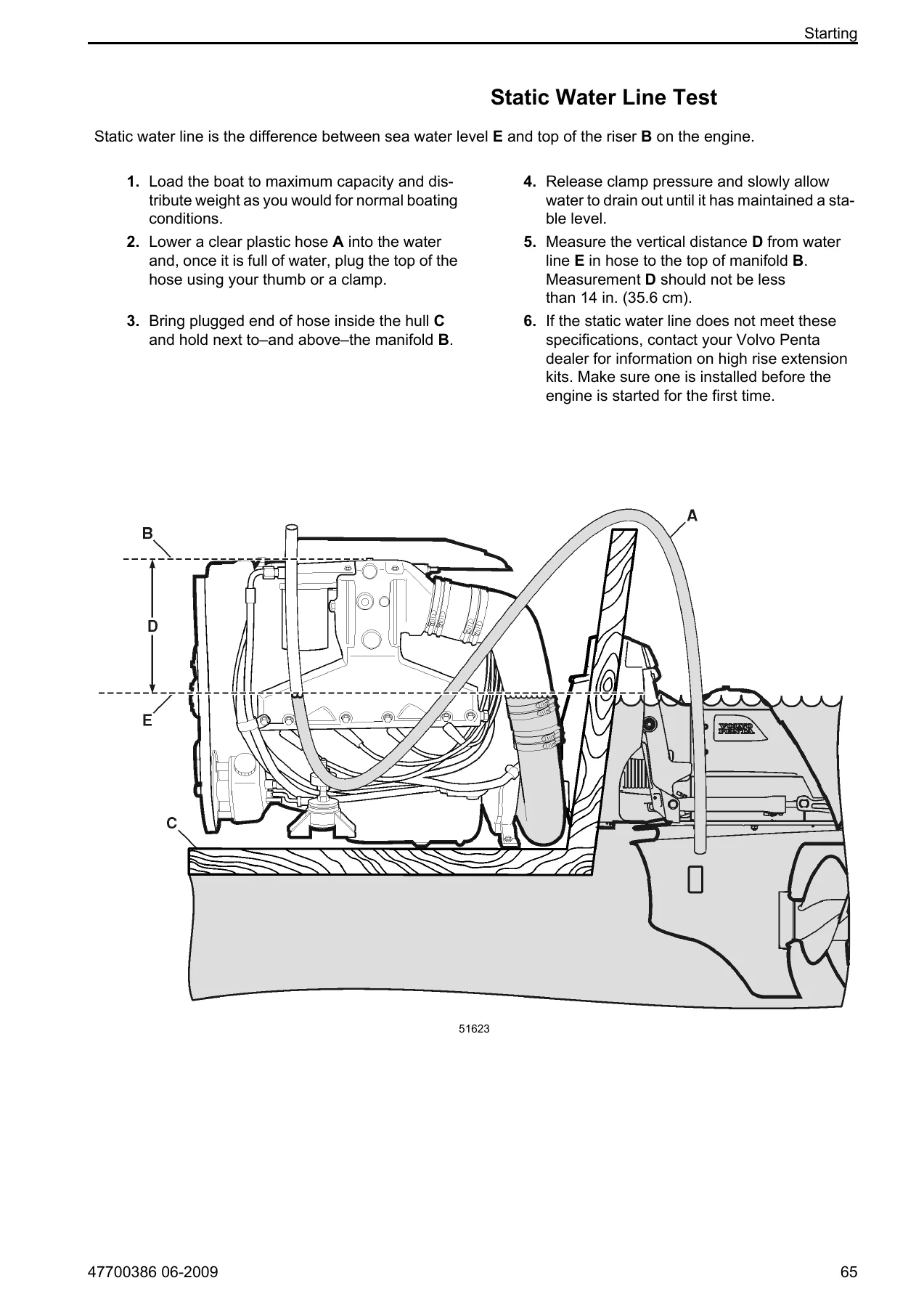
Static Water Linep. 66
Static Water Line Testp. 67
Before Startingp. 68
Starting the Enginep. 70
Audible Alarmp. 70
Starting Using the Start/Stop Panelp. 71
EVC Enginesp. 71
Flooded Enginep. 72
EVC Enginesp. 72
Operationp. 73
Replacement Parts and Tools Checklistp. 73
Reading the Instrumentsp. 74
Alarmsp. 74
Maneuveringp. 75
Power Trim/Tiltp. 75
Operating Trim Controlsp. 76
Determining the Proper Trimp. 77
Operating in β€œBow-up” Positionp. 77
Operating in β€œBow-down” Positionp. 78
Trim/Tilt Motor Protectionp. 79
Cruising Speedp. 80
Disengaging the Shift Functionp. 80
Single Control Lever Operationp. 80
Shifting and Speed Controlp. 81
Twin Unit Maneuveringp. 82
Engine Synchronization Functionp. 82
Neutral Interlock Buttonp. 83
Station Handlingp. 83
Steering System Operationp. 85
Twin Unit Steeringp. 85
Steering with Control Leversp. 86
Loss of Steeringp. 87
Steering System Fault Messagesp. 88
Steering System General Messagesp. 88
Maneuvering with the Joystickp. 89
Operation Breakp. 91
Emergency Stop Switchp. 91
Special Boating Conditionsp. 92
Operating in Freezing Temperaturesp. 92
Shallow Water Operationp. 92
High Altitude Operationp. 93
Salt Water Operationp. 93
High Performance Boat Operationp. 93
Engine Shutdownp. 94
Before Engine Shutdownp. 94
Power Tilt Operationp. 94
Stop the Enginep. 94
Stopping Using the Start/Stop Panelp. 95
After Engine Shutdownp. 96
Engine Flushp. 96
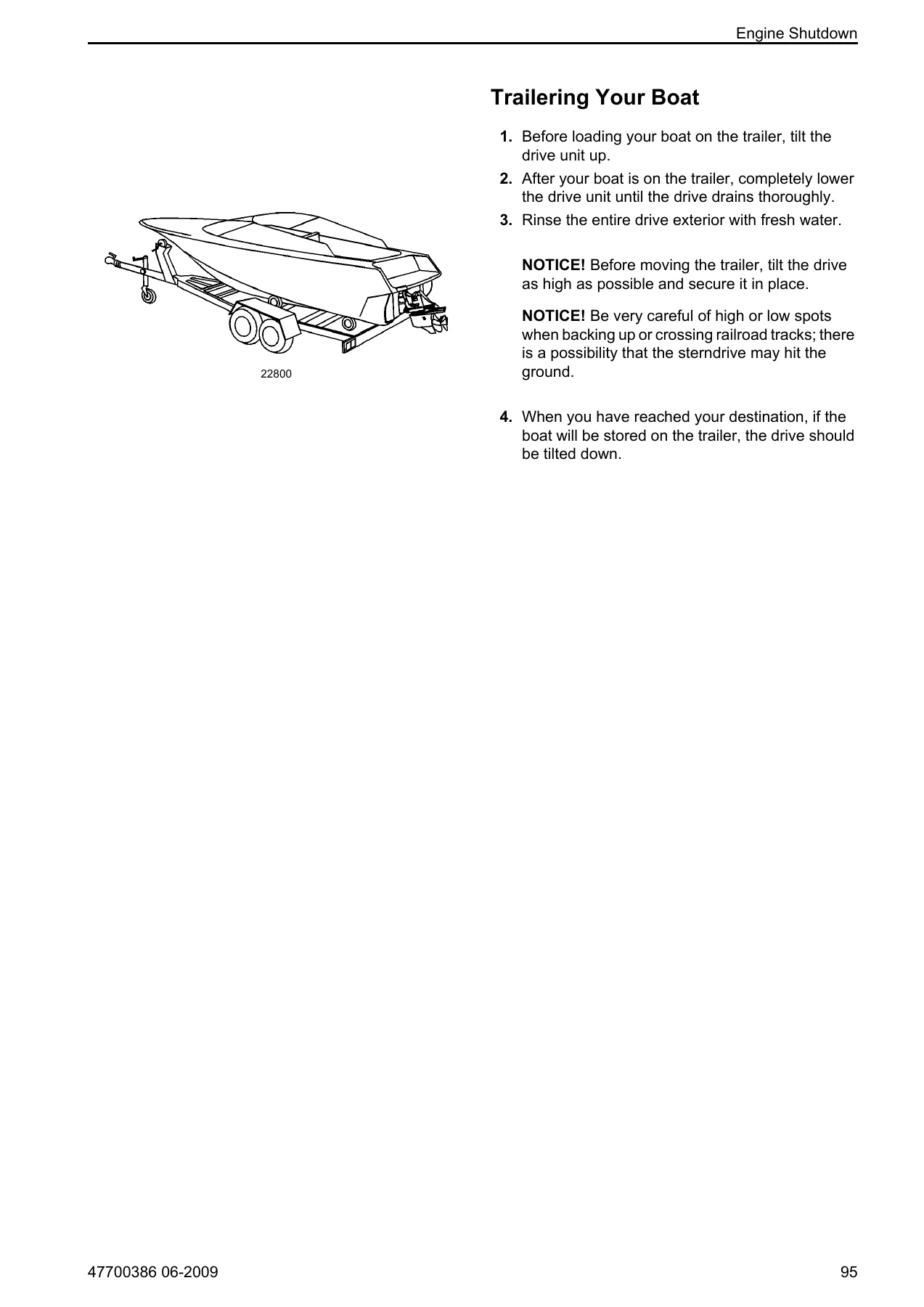
Trailering Your Boatp. 97
Draining the Enginep. 98
Draining Raw Water Cooled Enginesp. 98
Draining Raw Water Side of Closed Cooling System Enginesp. 99
Fault Code Registerp. 100
In Case of Emergencyp. 108
Running Agroundp. 108
Tie Rod (Twin Installations Only)p. 108
Starting Using Auxiliary Batteriesp. 109
Troubleshootingp. 110
Engine Troubleshooting Guidesp. 110
Less than Optimal Performancep. 115
Hull Weightp. 115
Engine Protection Modep. 116
Low Oil Pressurep. 117
Engine Overheating (EFI Engines)p. 118
Water in Bellowsp. 118
Water in Oil and Oil Levelp. 118
Oil Sensor Resetp. 119
Electric Fuel Pumpsp. 120
Circuit Breakers and Fusesp. 121
EVC Diagnostic Functionp. 122
Alarms and Messagesp. 122
Propeller Replacementp. 124
Boat Bottomp. 126
Engine Submersionp. 126
Trim/Tilt Motor Protectionp. 126
Steeringp. 127
Maintenance Schedulep. 128
Owner's Responsibilityp. 128
Safety and Preventative Maintenance Checklistsp. 128
Scheduled Maintenancep. 130
Hour Meterp. 130
Maintenance Schedulep. 131
Maintenancep. 133
Doing Your Own Maintenance and Repairsp. 133
Stop the Engine Before Servicep. 134
Starting the Engine After Servicep. 134
Fire and Explosionp. 134
Fuel and Lubrication Oilp. 134
Batteriesp. 135
Hot Surfaces and Fluidsp. 135
Cooling Systemp. 135
Accidentsp. 135
Washing the Enginep. 136
Certified Enginesp. 136
Engine, Generalp. 137
Serpentine Beltp. 137
Sacrificial Anodesp. 138
Inspecting Heat Exchanger Anodesp. 138
Engine Alignmentp. 138
Fuel Systemp. 139
Engine Fuel Filter Replacementp. 139
Cooling Systemp. 140
Replacing the Engine Thermostatp. 140
Impeller: Checking & Replacingp. 141
Electrical Systemp. 142
Battery Maintenance and Replacementp. 142
Spark Plugsp. 143
Drivep. 144
Checking the Drive Unit Lubricantp. 144
Power Trim/Tilt-Fluidp. 144
Pitot Tube (Speedometer Port)p. 145
Sacrificial Anodesp. 146
Painting the Drivep. 147
Propellerp. 147
Propeller Carep. 147
Steeringp. 148
Power Steering Reservoir Fluid Levelp. 148
Storagep. 149
Laying Up (Winterization)p. 149
Short Term Storagep. 149
Long Term Storagep. 150
Bringing Out of Storagep. 151
Calibration and Settingsp. 152
Calibrating the Joystick Functionp. 153
Technical Datap. 154
Enginesp. 154
Disclaimerp. 154
4.3GXiE-Mp. 155
5.0GXiE-M, 5.0GXiE-MFp. 156
5.7GiE-300-M, 5.7GiE-300-MF, 5.7GXiE-M, 5.7GXiE-MFp. 157
8.1GiE-M, 8.1GiE-MF, 8.1GXiE-M, 8.1GXiE-MFp. 158
Lubrication Systemp. 159
Engine Oil Specificationsp. 159
Checking Engine Oil Levelp. 159
Adding Oil if Lowp. 160
Scheduled Oil Servicep. 160
Fuel Systemp. 161
General Warningsp. 161
Gasoline Requirementsp. 161
Ethanol-Blended Fuels (E10)p. 161
Methanolp. 162
Electronic Fuel Injectionp. 163
Detonation (Spark Knock)p. 163
Electrical Systemp. 164
Battery Cablesp. 164
Batteryp. 164
Sterndrivep. 165
Drive Componentsp. 165
Sterndrive Oil Capacityp. 165
Identification Numbersp. 166
Informational Decals and Identification Platesp. 166
Identification Numbersp. 168
Declaration of Conformityp. 169
Recreational Craft Propulsion Enginesp. 169
4.3 Litrep. 170
5.0 Litrep. 171
5.7 Litrep. 172
8.1 Litrep. 173
4.3 Litre 5.0 Litre 5.0GXiE-M, 5.0GXiE-MF 5.7 Litre 5.7GiE-300-M, 5.7GiE-300-MF, 5.7GXiE-M, 5.7GXiE-MF 7" Color Display 8.1 Litre 8.1GiE-M, 8.1GiE-MF, 8.1GXiE-M, 8.1GXiE-MF Accidents ACP Active Corrosion Protection System Adding Oil if Low Alarm Display (Optional) Alarms Alarms and Messages Audible Alarm Basic Safety Rules of Boating Battery Battery Cables Battery Maintenance and Replacement Before Engine Shutdown Before Starting Bringing Out of Storage Calibrating the Joystick Function Camera Carbon Monoxide Certified Engines Checking the Drive Unit Lubricant Circuit Breakers and Fuses Consumer Affairs Department Control Panel Cruising Speed Declaration of Conformity Determining the Proper Trim Detonation (Spark Knock) Disabling Boost Mode Disabling the Docking Function Disclaimer Docking Station Panel Doing Your Own Maintenance and Repairs Draining Raw Water Cooled Engines Draining Raw Water Side of Closed Cooling System Engines Draining the Engine Drive Drive Components Electric Fuel Pumps Electrical System , Electronic Fuel Injection Electronic Steering Control Unit Emergency Stop Switch Enabling Boost Mode Enabling the Docking Function Engine Alignment Engine Flush Engine Fuel Filter Replacement Engine Overheating (EFI Engines) Engine Submersion Engine Troubleshooting Guides Engine, General Engines EVC (Electronic Vessel Control) EVC Basic Window EVC Engines , EVC Info EVC System Display Flooded Engine Friction Brake Fuel economy Fuel System , Gauges General Safety Information General Warnings High Altitude Operation High Performance Boat Operation Hour Meter Hull Weight Identification Numbers , Impeller: Checking & Replacing Info Beep Informational Decals and Identification Plates Laying Up (Winterization) Less than Optimal Performance Log Cal. Factor Long Term Storage Loss of Steering Low Oil Pressure Lubrication System Main Menu Maneuvering Maneuvering with the Joystick Models Multiple Window Display My View Neutral Warm Up Oil Sensor Reset Operating in Freezing Temperatures Operating Trim Controls Operation Break Optional Gauges Other Instruments Owner’s Identification Card Owner's Responsibility Pitot Tube (Speedometer Port) Power Steering Reservoir Fluid Level Power Tilt Operation Power Trim Assistant Power Trim Buttons Power Trim Instrument and Displays Power Trim/Tilt Power Trim/Tilt-Fluid Propeller Propeller Care PTA (On/Off) Reading the Instruments Recreational Craft Propulsion Engines Replacement Parts and Tools Checklist Replacing the Engine Thermostat Running Aground Sacrificial Anodes , Safety and Preventative Maintenance Checklists Safety Precautions While Operating the Boat Salt Water Operation Scheduled Maintenance Settings – EVC System Display Settings Menu Shallow Water Operation Shifting and Speed Control Short Term Storage Single Control Lever Operation Spark Plugs Special Boating Conditions Starting the Engine Starting the Engine After Service Starting Using Auxiliary Batteries Starting Using the Start/Stop Panel Static Water Line Static Water Line Test Station Handling Steering , Steering System Steering System Fault Messages Steering System General Messages Steering System Operation Steering with Control Levers Stop the Engine Stop the Engine Before Service Stopping Using the Start/Stop Panel Tie Rod (Twin Installations Only) Tow Mode Trailering Your Boat Trim Ranges Trim/Tilt Motor Protection , Twin Unit Maneuvering Twin Unit Steering Warranty Information Washing the Engine Water in Bellows Water in Oil and Oil Level Vessel Viewable Options in the Main Menu Volvo Action Service (VAS) Volvo Penta Dealer Network Volvo Penta on the Internetp. 175


IMAGES PREVIEW

Volvo Penta 4.3L 5.0L 5.7L 8.1L SX-A DPS-A Operator Manual - PDF Download β€” PDF page 16 preview
Volvo Penta 4.3L 5.0L 5.7L 8.1L SX-A DPS-A Operator Manual - PDF Download β€” PDF page 67 preview
Volvo Penta 4.3L 5.0L 5.7L 8.1L SX-A DPS-A Operator Manual - PDF Download β€” PDF page 97 preview

Reviews

There are no reviews yet.

Be the first to review “Volvo Penta 4.3L 5.0L 5.7L 8.1L SX-A DPS-A Operator Manual – PDF Download”

What Our Customers Say

β˜…β˜…β˜…β˜…β˜… Live reviews from customers
Loading customer reviews...
0
    0
    Your Cart
    Your cart is emptyReturn to Shop
    πŸ›’
    Recently Purchased
    πŸ•’ verified order